

GE Washer Not Draining? 5 Common Causes and Solutions
A GE washer not draining can leave standing water in the tub and clothes soaking wet at the end of a cycle. The cause can range from a simple drain hose obstruction to a failed internal component. Knowing where to look first can save time and unnecessary service calls.
Common symptoms of a GE washer drainage problem include:
- Water left in the washer after a cycle completes
- Clothes coming out soaking wet
- The washer won't complete the spin cycle
- Humming or unusual noises while draining
- Water draining more slowly than normal
One important distinction: if there is standing water in the tub, you are dealing with a true drainage problem. If the tub is empty but the clothes are soaking wet, the issue may instead be related to the spin cycle or an unbalanced load.
Below are the five most common causes, starting with the easiest to check before considering an internal component failure.
Why Is My GE Washer Not Draining?
The drainage system in a GE washer relies on several components working together: the drain hose, the drain pump, the pump filter on applicable models, and the household drain. A restriction or failure anywhere in that chain can prevent water from leaving the tub. Working through these causes in order, starting with the easiest external checks, is the most efficient way to identify the problem.
1. Drain Hose Is Kinked or Clogged
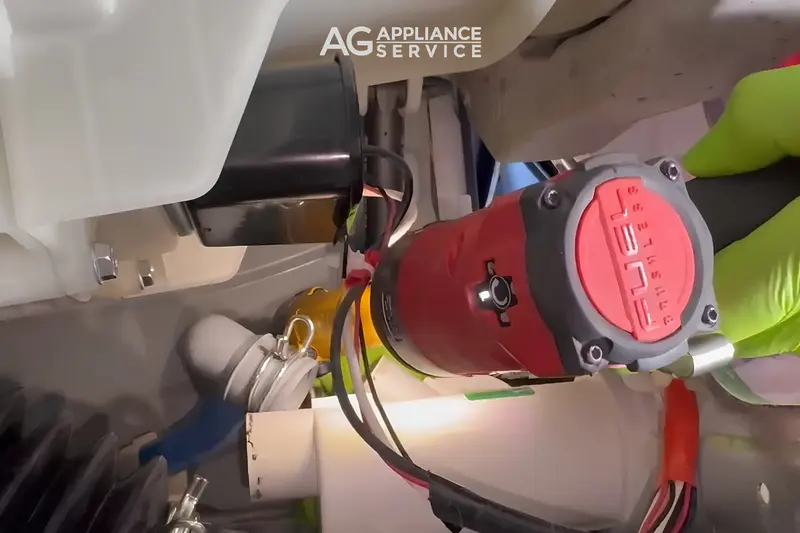
A bent, crushed, or clogged drain hose is one of the most common and most overlooked causes of a GE washer not draining. Because the hose runs behind or under the machine, problems are easy to miss.
Common causes include:
- Washer pushed too close to the wall, pinching the hose
- A kink or tight bend in the hose routing
- Debris buildup blocking water flow inside the hose
- Improper hose positioning relative to the standpipe
Check that the hose has a clear, unobstructed path to the household drain. GE's installation instructions for each model specify the correct hose positioning and standpipe height. Following those specifications prevents the most common installation-related drain issues.
2. Household Drain Is Clogged
The washer itself is not always the source of a drainage problem. When the standpipe or household drain line is blocked, the washer may pump water out perfectly, but that water has nowhere to go.
Signs that point to a household plumbing issue rather than the washer include:
- Water backing up around the standpipe or overflowing onto the floor as the washer drains
- Slow drainage in nearby sinks or fixtures at the same time
- The washer drains but the water returns or pools around the drain
The difference matters because a plumbing clog requires a plumber, not an appliance technician. If you are also seeing water on the floor near the washer, it is worth checking our guide to washer leaking to help distinguish between a plumbing overflow and an appliance leak.
3. Drain Pump or Pump Filter Is Clogged
Coins, lint, small clothing items, and other debris that make it past the tub can accumulate in the drain pump or pump filter and restrict water flow. Many GE front-load washers and some other models include an accessible pump filter, while most newer GE top-load washers do not have a consumer-accessible pump filter.
Filter location and cleaning procedures vary by model, so the right starting point is your owner's manual. It will tell you whether your model has an accessible filter, where it is located, and how to clean it safely. A blockage that cannot be safely reached from the outside, or that has reached the pump housing itself, may require a service call to avoid damage.
4. Load Is Unbalanced
An uneven or overloaded washer can have difficulty completing its cycle. Heavy items like towels, blankets, and bulky clothing tend to collect on one side of the tub, creating an imbalance that can interrupt or reduce the final spin. The washer may stop or repeatedly attempt to rebalance the load, leaving clothes much wetter than normal.
This is different from the washer failing to pump standing water from the tub: an unbalanced load primarily affects water extraction during spin. If the washer stops mid-cycle or won't spin out properly, try redistributing the load and running a Drain & Spin cycle. Keeping loads within the recommended capacity and mixing heavy items with lighter ones helps prevent the problem from recurring.
If the washer is also shaking, walking, or making a loud banging noise during spin, the issue may go beyond load balance. Suspension or balance components may be involved. Learn more about what causes a washer banging during spin cycle and when it warrants professional attention.
5. Drain Pump Is Malfunctioning
The drain pump is the component that actively moves water out of the washer tub. When it begins to fail, drainage problems become consistent regardless of how well the hose, household drain, and filter are maintained.
Signs that point to a possible drain pump problem:
- The washer hums but doesn't drain
- Water drains very slowly even with no visible blockage
- Standing water remains after running a Drain & Spin cycle
- Drainage problems continue after checking and clearing the hose and applicable filter
A faulty pump that is humming without draining may have a foreign object lodged in the impeller, or the motor winding itself may have failed. Either way, professional diagnosis is the right next step. Attempting to disassemble the pump housing without the proper tools risks damaging surrounding components.
Why Is My GE Washer Not Draining or Spinning?
Drain and spin problems often occur together. If the washer cannot remove water properly, the cycle may stop, fail to reach its normal final spin, or leave clothes excessively wet. The exact relationship varies by washer design and model.
When a GE washer isn't draining or spinning, the most likely causes are:
- A kinked or restricted drain hose
- A clogged pump filter or blocked pump
- An unbalanced or overloaded load
- A faulty drain pump
- Model-specific control or lid-switch issues that prevent the spin sequence from starting
Starting with the drain hose and working through the list above will identify most causes. If the washer completes the drain but still won't spin, a lid switch or motor control issue may be involved. Those issues require professional diagnosis.
When Does a GE Washer Drain Problem Need Professional Repair?
Some drainage issues are easy to identify and clear at home. Others require a technician to diagnose safely. Reach out to a professional when:
- The washer hums but won't drain, even after checking the hose and filter
- Standing water remains after running a Drain & Spin cycle
- The problem keeps returning after you clear the hose or filter
- The drain pump appears to have failed or is making unusual noises
- Error codes repeatedly appear on the display
- The washer is leaking in addition to not draining
Schedule GE Washer Repair in Miami
A GE washer not draining can result from anything between a simple hose obstruction and a failed drain pump. Addressing the problem promptly matters because standing water can lead to unpleasant odors and may increase the risk of leaks or overflows, depending on the cause.
AG Appliance Service is factory authorized to service GE appliances throughout Miami and South Florida. Our technicians have the tools and experience to diagnose drain pump failures, blockages, control issues, and other GE washer drainage problems.
GE Washer Still Not Draining?
AG Appliance Service provides factory-authorized washer repair in Miami and throughout South Florida. We service GE washers and can help diagnose drain pump failures, clogs, and control issues.
Schedule GE Washer RepairFor related washer issues, these guides may also be helpful: