

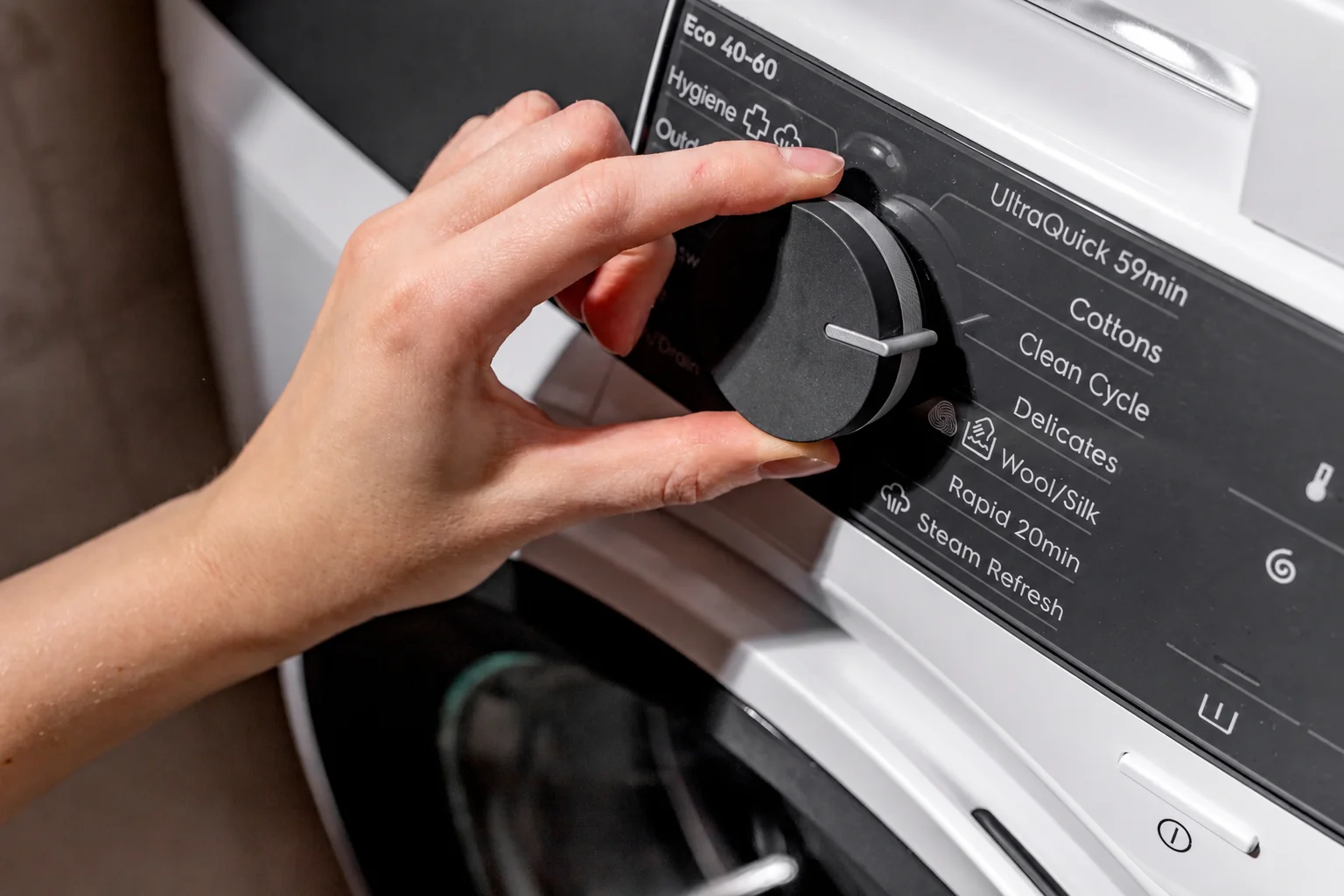
How to Deep Clean a Front-Load Washer: The Suds Test Every Owner Should Know
Here's a quick test: start your front-load washer on an empty drum and watch through the door. See suds? A lot of them — even though there's no laundry in there at all? That foam is residual detergent that has built up inside your machine over time, and it's almost certainly the reason your clothes come out smelling drab and your washer has that familiar musty odor.
One of our technicians filmed exactly this on a recent service call — it's one of the most common things our Miami washer repair team encounters on front-load machines throughout Miami-Dade and Broward. The drum was packed with suds from wall to wall on an empty clean cycle. In his words: "If you run your washer empty and it looks like this, you are using way too much detergent. This machine is in serious need of multiple tub clean cycles."
What Does It Mean When a Front-Load Washer Has Suds With No Load?
Front-load washers use dramatically less water than top-loaders — typically 10 to 15 gallons per cycle compared to 30 to 45. That efficiency is one of their biggest selling points, but it also means they're far more sensitive to how much detergent you use. Even slightly too much detergent per load will leave behind a residue that the low water volume can't fully rinse out.
Over months and years of use, that residue accumulates inside the drum, the door gasket, the detergent dispenser, and the drum's internal surfaces. The result is a biofilm — a damp, soap-rich layer that bacteria and mold love. That's where the musty smell comes from, and it's also why your clothes can start to smell "off" even when they come straight out of a freshly washed cycle.
How Do You Deep Clean a Front-Loading Washer?
When a machine has visible suds on an empty cycle, it needs more than one cleaning pass. The protocol that works — and that we recommend to our clients — is a two-cycle approach:
Cycle 1: White Vinegar Flush
White vinegar is a natural acid that cuts through detergent residue and mineral deposits without damaging the rubber seals or drum. Here's how to use it:
- Pour white vinegar into every compartment of the detergent dispenser — the main wash, the pre-wash, and the fabric softener cup.
- Add one to two cups of white vinegar directly inside the drum itself.
- Run a full tub clean cycle (or, if your machine doesn't have one, the hottest and longest wash cycle available).
- Do not add any detergent, bleach, or laundry pods. Let the vinegar work on its own.
The vinegar penetrates and loosens the detergent cake on the drum walls, the back of the dispenser, and the internal drum surfaces. You may see suds during this cycle — that's the residue breaking loose, which is exactly what you want.
Cycle 2: Washing Machine Cleaner Tablet
After the vinegar cycle has flushed the bulk of the buildup, run a second tub clean cycle using a purpose-made washing machine cleaner. Two products we recommend:
- Affresh Washing Machine Cleaner — tablets designed specifically to dissolve residue and biofilm. Drop one tablet directly into the drum (not the dispenser) and run the tub clean cycle.
- Active Washing Machine Cleaner tablets — another solid option that works on both HE front-loaders and top-loaders.
The two-cycle approach matters because vinegar alone softens and loosens the buildup, and the cleaner tablet in the second cycle finishes the job — reaching the residue the acid flush freed up but didn't fully remove. Skipping the second cycle leaves behind enough residue to restart the problem quickly.
How Do I Make My Front Load Washer Stop Smelling?
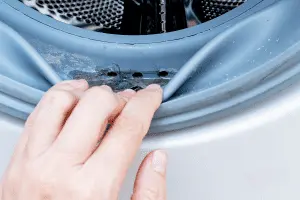
The two-cycle deep clean above will handle the source of the odor inside the drum. But the other common odor source on front-loaders is the rubber door gasket — the bellows-shaped seal around the door opening. Moisture and residue collect in its folds and can grow mold even after the drum is clean.
How Do I Clean the Rubber Seal on My Front Load Washer?
Pull the gasket back and inspect the inner fold — it often contains pooled water, lint, and black mold spots that cleaning cycles can't reach. To clean it:
- Remove any visible debris, coins, or foreign objects from the fold.
- Wipe the entire inner surface with hot soapy water and a soft cloth.
- For stubborn black mold spots, apply a 10% bleach solution with an old toothbrush and scrub gently.
- Rinse thoroughly and leave the door open for an hour to dry completely.
After cleaning, make it a habit to leave the door ajar after every load. A closed door traps moisture; an open door lets the drum and gasket dry out between cycles, which dramatically slows mold and odor regrowth.
How to Clean a Front Load Washer Drum
Beyond the two-cycle deep clean, you can run the vinegar cycle — or at minimum the cleaner tablet cycle — once a month as routine maintenance. Most modern front-loaders have a dedicated tub clean or drum clean setting; check your owner's manual for the recommended product and cycle. If you don't have a tub clean setting, the hottest long wash cycle with no load accomplishes the same thing.
Can I Run Vinegar Through My Front Load Washer?
Yes — white distilled vinegar is safe for front-load washers and is one of the most effective natural cleaners you can use. The key is to use it on its own (no detergent mixed in) and to run it through a full hot cycle. Don't use apple cider vinegar or cleaning vinegar on a regular basis — distilled white vinegar is the right product. And don't combine vinegar and bleach in the same cycle; use them in separate passes if you need both.
How to Keep Your Front Load Washer Clean
The suds-in-an-empty-drum problem doesn't come back overnight — it builds over months of over-dosing. Once you've done the two-cycle deep clean, these habits will keep it from coming back:
- Use HE detergent only, and use less than the cap suggests. Most manufacturers' recommended amounts are higher than what modern HE machines actually need. Start with half the suggested amount and adjust from there.
- Leave the door and dispenser drawer open after every load to allow moisture to escape.
- Wipe the door gasket dry with a cloth after the last load of the day.
- Run a tub clean cycle once a month — vinegar, Affresh, or Active — to prevent buildup from reaching the levels shown in the video above.
- Clean the dispenser drawer monthly by pulling it out and rinsing it under hot water; detergent and softener residue accumulates there too.
Is It Worth It to Have My Front-Load Washer Professionally Cleaned?
When a machine has years of buildup — visible on an empty cycle, as in the video above — DIY cleaning cycles will improve the situation significantly, but they won't always reach everything. A professional service goes further: the dispenser assembly is fully removed and cleaned, the door gasket is inspected for tears or mold penetration that surface cleaning can't fix, the pump filter (often clogged with lint and debris) is cleared, and the technician can identify whether the machine has any underlying issues contributing to odor or poor performance.
Professional washing machine maintenance also gives you an honest assessment of whether a very old machine is worth continuing to invest in — or whether the detergent buildup has caused damage to seals or internal components. Either way, you come out with more information and a cleaner machine. If your front-load washer is producing suds on an empty cycle and the smell hasn't gone away after cleaning, give AG Appliance Service a call — we're happy to take a look.