

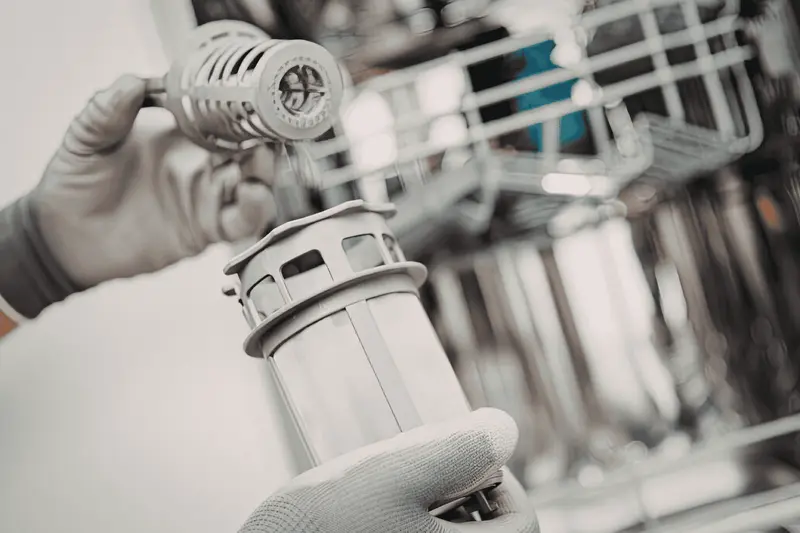
How to Clean a Dishwasher Filter: 9 Easy Steps
If your dishwasher has started leaving behind food bits, cloudy glasses, or unpleasant smells, the filter may be the reason. Learning how to clean a dishwasher filter is one of the simplest ways to improve cleaning performance and help your appliance last longer. Many homeowners do not realize that a dirty filter can affect draining, washing power, and even the smell inside the tub.
The good news is that this is a basic maintenance task that usually takes less than 15 minutes. Once you know where the filter is and how to remove it safely, the process becomes easy to repeat every month or two. In this guide, we will walk through each step, explain what tools you need, and point out warning signs that may mean the problem is bigger than a dirty filter.
What Does a Dishwasher Filter Do?
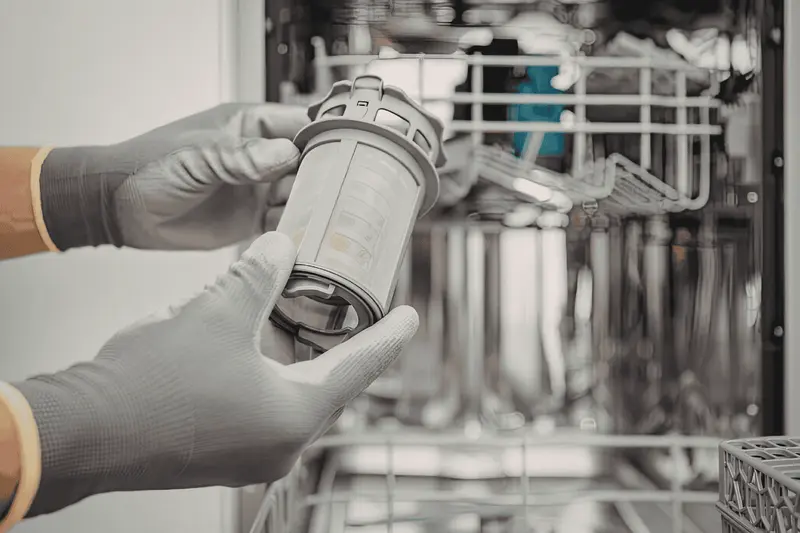
The dishwasher filter catches food particles, grease, and debris during the wash cycle. Its job is to keep that debris from being pushed back onto your dishes or into the drain pump. Some dishwashers have self-cleaning filters, but many modern models use manual filters that need regular cleaning. Not every dishwasher has a user-removable manual-clean filter, so check your owner's manual if you are unsure.
When the filter gets clogged, water cannot circulate as well as it should. That can lead to dirty dishes, standing water, and odors that seem to get worse every time you run a load. That is why knowing how to clean a dishwasher filter is such an important part of basic appliance care.
Signs Your Dishwasher Filter Needs Cleaning
Some signs are easy to miss at first, but they usually become more obvious over time. If you notice any of the issues below, the filter is a smart place to start.
Watch for these common signs before the problem gets worse:
- Dishes come out with food particles still stuck on them
- The dishwasher smells musty or sour
- Water drains slowly after a cycle
- You see standing water in the bottom of the tub
- Glasses look cloudy or gritty
- In some cases, the dishwasher may sound louder than usual during operation
What You Need Before You Start
Once you have confirmed the filter is likely the issue, gather a few basic supplies before removing it.
Most dishwasher filter cleaning jobs require only a few household items. You do not need special equipment, and harsh chemicals are usually unnecessary.
Gather these items first so the process goes smoothly:
- Dish soap
- Warm water
- A soft sponge or cloth
- A soft toothbrush or small cleaning brush
- A towel for drying or protecting the floor
Avoid steel wool, stiff wire brushes, or anything abrasive. These can damage the filter screen or plastic housing, which may cause bigger issues later.
How to Clean a Dishwasher Filter Step by Step
If you are wondering how to clean a dishwasher filter without damaging anything, the safest method is to work slowly and follow your dishwasher manual when possible. Even though the design varies by brand, the general steps are very similar.
Follow these steps carefully for a safe and effective cleaning:
- Turn off the dishwasher. Make sure the appliance is off and cool before you begin. You do not want to reach into a machine that has just finished a hot cycle.
- Remove the bottom rack. Slide out the lower dish rack so you can access the bottom of the dishwasher tub.
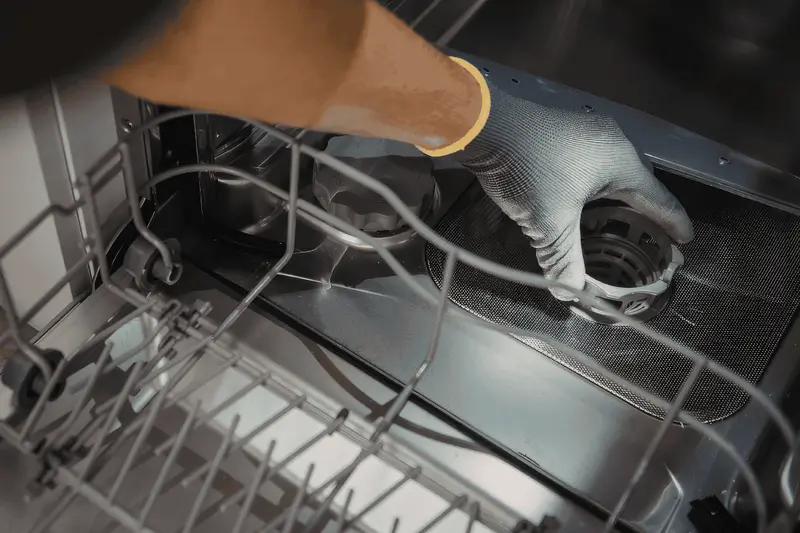
- Locate the filter. In most models, the filter sits on the bottom of the tub, often near the spray arm. It may be round, cylindrical, flat, or a combination of both.
- Unlock and remove the filter. Many filters twist counterclockwise and lift out. Use gentle pressure; never force it.
- Rinse under warm water. Hold the filter under running warm water to remove loose debris.
- Scrub gently. Use warm water and a soft brush, plus a small amount of dish soap if needed, unless your manual says otherwise, to clean away grease, food buildup, and residue from the mesh and frame.
- Wipe the filter area. Before putting the filter back, wipe the cavity where it sits. Food and slime can collect there, too.
- Reinstall the filter. Place it back in position and lock it securely. An improperly installed filter can affect performance.
- Return the bottom rack. Slide the rack back in and run a short rinse cycle to check that everything is working normally.
That is the basic process for how to clean a dishwasher filter, and for most households, it is enough to restore better performance right away.
How Often Should You Clean the Filter?
The answer depends on how often you run your dishwasher and how much food debris ends up on your plates before loading. Families that use the dishwasher daily may need to clean the filter once a month. If you use it less often and rinse dishes well beforehand, every two or three months may be enough.
A few habits can help you decide on the right schedule:
- Clean it monthly if you run daily loads
- Check it more often if you do not scrape plates well
- Inspect it right away if the dishes stop coming out clean
- Make filter cleaning part of your regular kitchen maintenance routine
Once you get used to how to clean a dishwasher filter, keeping up with it becomes quick and easy.
Mistakes to Avoid
While the task is simple, a few common mistakes can create problems. Taking shortcuts or using the wrong tools can damage the filter or leave buildup behind.
Avoid these common cleaning mistakes:
- Do not force the filter out if it feels stuck
- Do not use bleach unless the manufacturer recommends it, especially in dishwashers with stainless steel interiors
- Do not scrub with metal brushes or abrasive pads
- Do not reinstall the filter loosely
- Do not ignore standing water or leaking after cleaning
If your unit still has water problems or starts leaking around the door or underneath the machine, a dirty filter may not be the only cause. Here are some possible reasons your dishwasher is leaking and what to look for next.
When Cleaning the Filter Does Not Fix the Problem
Sometimes a dishwasher continues to underperform even after the filter is spotless. If that happens, there may be an issue with the drain hose, spray arms, pump, float switch, or door seal. In some cases, years of grease buildup inside hidden components can also reduce performance.
If you have already tried cleaning a dishwasher filter and the machine still smells bad, drains slowly, or leaves dishes dirty, it is time to look deeper. Strange noises, recurring puddles, or repeated drainage issues usually point to a repair need rather than simple maintenance.
If you are already seeing water left behind, there may be more going on than just a dirty filter. This guide on what to do when your dishwasher isn't draining can help you understand the next steps.
Extra Tips to Keep Your Dishwasher Cleaner Longer
Cleaning the filter helps a lot, but a few extra habits can help prevent future buildup and reduce the chances of bigger issues.
These simple habits can help your dishwasher stay cleaner between filter washings:
- Scrape large food scraps off dishes before loading
- Do not overload racks, since crowded dishes block water flow
- On some models, running hot water at the sink before starting a cycle can help the dishwasher start hotter
- Clean the spray arms if you notice clogged holes
- Wipe the door gasket occasionally to remove grime
- Run a dishwasher cleaning cycle with a manufacturer-approved cleaner as needed
Knowing how to clean a dishwasher filter can save you time, improve cleaning results, and help prevent avoidable service issues. If your dishwasher still struggles after cleaning the filter, it could be dealing with a drainage or leak issue. In that case, it may help to speak with a dependable dishwasher repair Miami team for a closer inspection.