

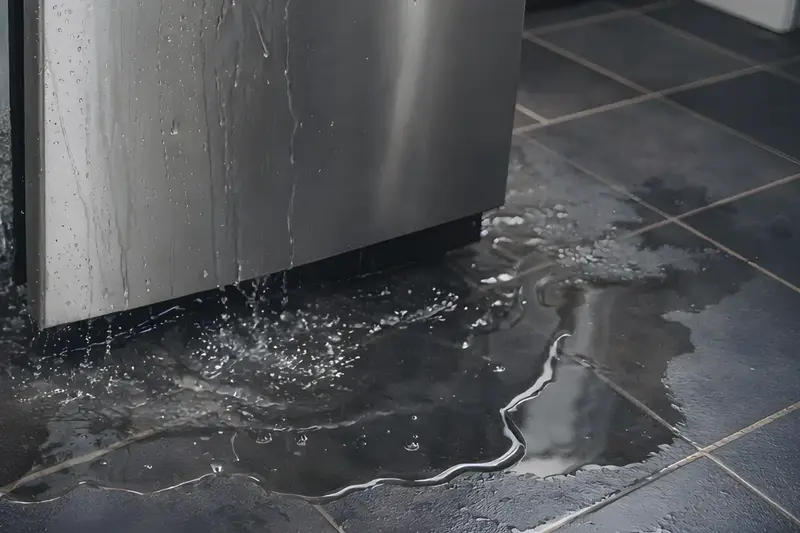
Dishwasher Leaking? Common Causes and What It Could Mean
Noticing water pooling around your appliance can be frustrating and concerning. A leaking dishwasher can lead to water damage, unpleasant odors, and interruptions to your daily routine. While dishwashers are designed to operate with large amounts of water, they should always keep that water contained inside the appliance.
If your dishwasher leak appears suddenly or seems to be getting worse, the cause could range from something simple like buildup around the door seal to more complex internal component failures. Understanding the possible reasons behind a leaking dishwasher can help you recognize warning signs early and determine when professional service may be necessary.
Common Causes of a Dishwasher Leaking
When a dishwasher leaking issue occurs, the source is often tied to seals, internal components, or drainage problems. Some causes are related to routine wear, while others develop slowly over time due to buildup or mechanical failure.
Identifying the symptoms associated with each issue can make it easier to explain the problem when scheduling service and help prevent additional water damage in your kitchen.
Below are several of the most common causes that appliance technicians commonly inspect when diagnosing a dishwasher leaking problem.
Worn or Damaged Door Gasket
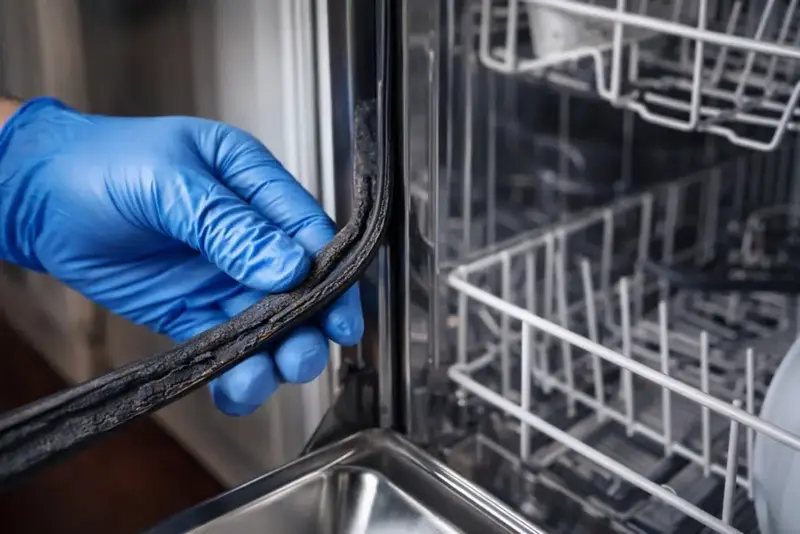
The door gasket is the rubber seal that runs along the edge of the dishwasher door. Its job is to keep water contained inside the tub during the wash cycle. Over time, exposure to heat, detergent, and repeated use can cause the gasket to dry out, crack, or lose flexibility.
If this seal becomes compromised, water can slowly escape while the appliance is running, leading to a dishwasher leak that may appear as small puddles near the front of the appliance.
Common signs that the door gasket may be the problem:
- Water appears along the bottom edge of the dishwasher door
- Visible cracks or gaps in the rubber seal
- Moisture on the floor after the wash cycle finishes
- Residue or buildup along the gasket
While light residue around the gasket can sometimes be cleaned away, a worn or damaged seal typically requires professional replacement.
Detergent or Suds Problems
Sometimes a dishwasher leaking situation is not caused by a mechanical failure but by excessive soap suds. Using the wrong detergent type or too much detergent can create foam that pushes water out of the appliance.
Dishwashers are designed to work with specific detergents that produce controlled levels of foam. Substituting dish soap or adding excessive detergent can cause suds to expand beyond normal operating levels.
Indicators of detergent-related leaking:
- Soap bubbles are visible inside the dishwasher
- Foam is leaking from the door area
- Residue left behind on dishes
- Leaking that occurs early in the wash cycle
Using the recommended detergent and appropriate quantities can help prevent this type of issue.
Damaged or Loose Spray Arms
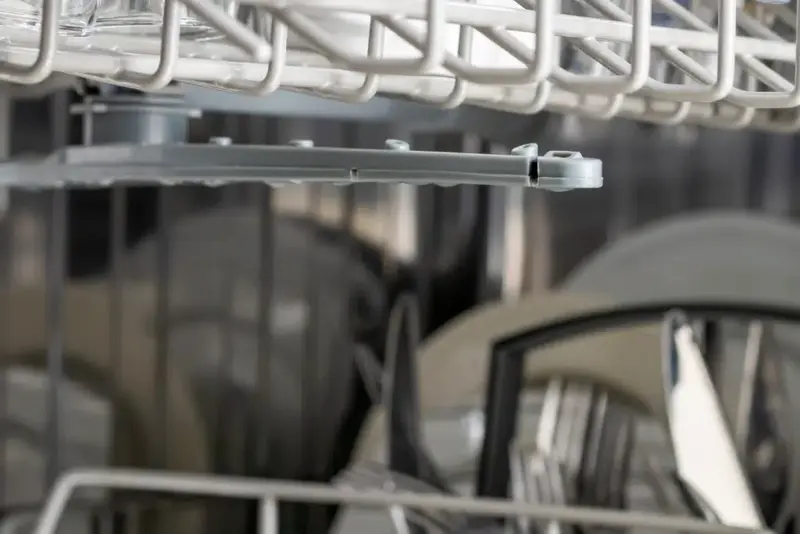
Spray arms distribute water throughout the dishwasher during each wash cycle. These rotating components are designed to evenly spray water across dishes for effective cleaning.
If a spray arm becomes cracked, loose, or blocked by debris, the high-pressure water inside the dishwasher may be redirected toward the door seal. In some cases, this can result in a dishwasher leaking issue that appears near the front of the appliance.
Symptoms that may point to spray arm issues:
- Dishes are not being cleaned evenly
- Unusual water splashing sounds during the wash cycle
- Visible damage to the spray arm
- Water appears on the floor during operation
A technician can inspect the spray arms and determine whether cleaning, adjustment, or replacement is required.
Clogged or Failing Drain Pump
Another common cause of a dishwasher leaking issue involves the drain system. The drain pump removes used water from the dishwasher at the end of each cycle. If the pump becomes obstructed or begins to fail, water may remain in the tub after the cycle.
In some cases, backed-up water can spill over internal components or escape through weak seals.
Warning signs associated with drain pump problems:
- Standing water remains in the bottom of the dishwasher
- Water is leaking during the drain cycle
- Unusual grinding or humming sounds
- A dishwasher that struggles to complete the draining stage
If your dishwasher isn't draining properly, it may indicate a deeper issue within the drain system that requires professional attention.
Faulty Water Inlet Valve
The water inlet valve controls the amount of water entering the dishwasher during the fill cycle. If the valve sticks open or fails to close properly, the dishwasher may overfill.
Most dishwashers use a float switch or sensor to prevent overfilling, but if the safety system fails or the valve leaks continuously, water may overflow or leak beneath the appliance.
Signs of a potential inlet valve issue include:
- The dishwasher appears to overfill
- Water levels inside the tub look higher than normal
- Water is leaking from beneath the appliance
- Unusual sounds during the fill cycle
Because the inlet valve is connected to the appliance's water supply and electrical system, diagnosis and replacement should always be handled by a trained technician.
Loose or Damaged Internal Hoses
Dishwashers rely on several internal hoses to move water between components. These hoses carry water to the spray arms, the drain pump, and other internal systems.
If one of these hoses becomes loose, worn, or damaged, it can allow water to escape inside the appliance cabinet, leading to a dishwasher leaking problem that may not be immediately visible.
Common indicators of internal hose problems:
- Water appears underneath the dishwasher
- Leaks that occur midway through the wash cycle
- Damp flooring near surrounding cabinets
- Recurring leaking even after cleaning the door gasket
Because these hoses are located inside the appliance, a trained technician is typically required to inspect and repair them safely.
Cracked Tub or Internal Components
Although less common, a cracked tub or damaged internal component can also lead to a dishwasher leaking problem. The dishwasher tub is designed to withstand high temperatures and constant exposure to water, but long-term wear or manufacturing defects can sometimes cause structural damage.
Leaks from the bottom of the appliance or water appearing underneath the unit may indicate a deeper internal issue.
Possible signs of internal damage include:
- Water is collecting beneath the dishwasher
- Persistent leaking during every wash cycle
- Visible cracks or damage inside the tub
- Moisture appearing in cabinets or flooring near the appliance
These types of issues often require a professional evaluation to determine whether repair or component replacement is the most effective solution.
When to Call a Professional
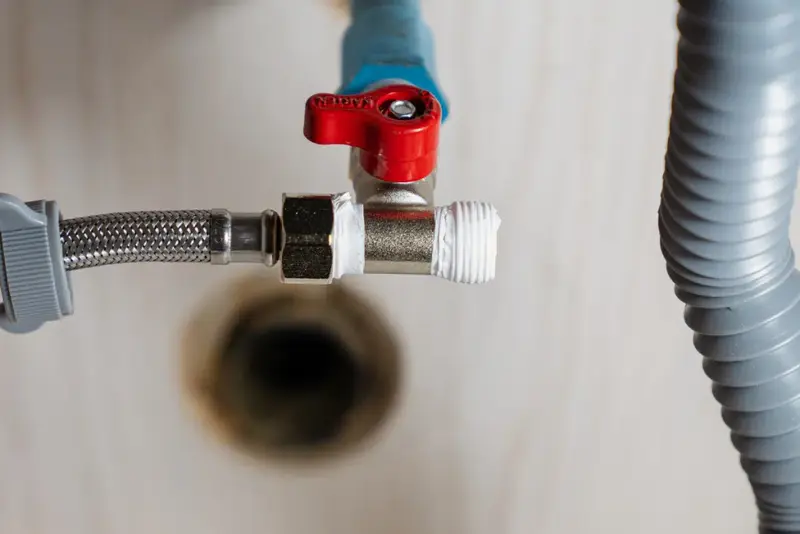
If you notice persistent moisture around your appliance, it is important to address the issue quickly. Even a small dishwasher leaking problem can eventually cause damage to the flooring, cabinets, and surrounding structures.
Professional technicians have the tools and experience needed to diagnose the exact source of the leak and recommend the appropriate repair.
If your appliance continues to leak or the cause is unclear, contacting experienced Miami dishwasher repair professionals can help ensure the problem is identified and resolved safely.
Addressing a dishwasher leaking issue early can help protect your home, extend the lifespan of your appliance, and keep your kitchen running smoothly.