

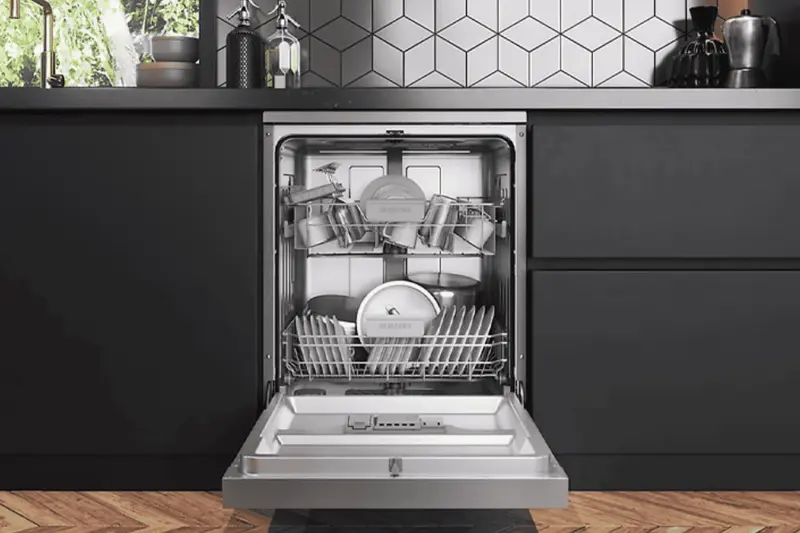
Why Your Samsung Dishwasher Is Not Cleaning Dishes Properly
If you are dealing with a Samsung dishwasher not cleaning dishes, the problem can be frustrating and easy to notice right away. Glasses may come out cloudy, plates may still have food stuck on them, and utensils may not look fully washed even after a complete cycle. In many cases, the issue starts with a minor maintenance problem, but it can also point to a worn part or a system failure that needs professional attention.
Below, we will walk through the most common reasons a dishwasher may stop cleaning well, the signs to watch for, and when it makes sense to schedule service. The goal is to help you understand what may be happening without getting into unsafe repair steps.
Samsung Dishwasher Not Cleaning Dishes: Common Causes
When a Samsung dishwasher not cleaning dishes issue keeps happening, it usually comes down to one of several common causes.
Some are simple surface-level problems that can be checked safely, while others involve internal components that should be diagnosed by a trained technician.
1. Improper loading is blocking water from reaching the dishes
Sometimes the dishwasher itself is not the only issue. Overloading the racks or placing large items in front of the spray path can prevent water and detergent from reaching every surface. Even a well-functioning dishwasher can leave dishes dirty if water cannot circulate freely.
Keep these loading habits in mind:
- Avoid nesting bowls or stacking items too tightly together.
- Keep large pans from blocking the spray arms.
- Place heavily soiled items where spray coverage is strongest.
- Make sure tall utensils or dishes are not preventing the arms from rotating.
If better loading habits improve the results, the machine may be working normally. If not, then the poor performance may be tied to water delivery, wash pressure, or another internal fault.
2. A dirty dishwasher filter restricting water flow
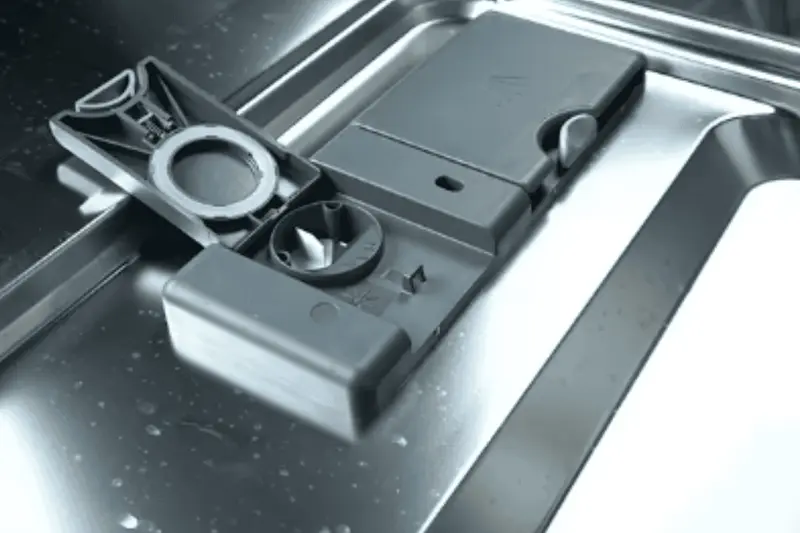
The filter helps trap food particles so they do not get redeposited onto your dishes. When it becomes dirty, water circulation can suffer, and leftover debris may stay inside the tub during the wash cycle. This is a common reason cleaning performance gradually gets worse over time.
Look for these common signs:
- A gritty or dirty film on dishes after washing.
- Standing food particles at the bottom of the tub.
- Persistent odors coming from the dishwasher.
- Slower or weaker overall cleaning results.
Routine filter care can make a noticeable difference. For more guidance on safe maintenance, see our article on how to clean a dishwasher filter. If the filter is maintained and the dishwasher still struggles, the problem may extend beyond basic upkeep.
3. Clogged or dirty spray arms
The spray arms are responsible for distributing water throughout the dishwasher. If their small openings become blocked by food particles, mineral buildup, or debris, water pressure may not reach your dishes the way it should. That often leads to food residue on plates, cups, and bowls, especially on the top rack or in the corners of the tub.
Start with these safe observations:
- Look for visible buildup on the spray arms.
- Notice whether certain areas of the dishwasher are consistently dirtier than others.
- Check if large food scraps are being left behind after a cycle.
If the spray arms are not moving water properly, the dishwasher may run through a full cycle without actually washing effectively. If basic cleaning does not improve performance, a professional can inspect for deeper blockage, wear, or circulation issues.
4. Hard water or detergent issues affecting cleaning results
Not every cleaning complaint comes from a broken part. In some homes, hard water can leave mineral residue on dishes and inside the dishwasher. In other cases, using the wrong detergent, too much detergent, or old detergent can lead to poor results. These problems can mimic a mechanical failure, especially when glasses appear cloudy or dishes feel filmy.
Here are a few signs this may be contributing:
- Cloudy glassware after multiple cycles.
- White residue or film on dishes.
- Soap that does not seem to rinse away fully.
- Cleaning issues vary from one load to the next.
This is worth checking because it is one of the less invasive explanations for a Samsung dishwasher not cleaning dishes. Still, if the issue persists after correcting detergent and maintenance habits, internal component problems become more likely.
5. Drainage problems leaving dirty water behind
A dishwasher also needs to drain properly between parts of the cycle. If dirty water is not leaving the tub as it should, that water can continue circulating through the dishes. The result may be food particles left behind, unpleasant odors, or dishes that look worse than expected after washing.
Watch for these warning signs:
- Water sits at the bottom after the cycle ends.
- Food debris remains in the tub.
- A sour or musty smell inside the dishwasher.
- Recurring poor cleaning even after regular upkeep.
Drainage issues can involve the drain pump or another related part, and those components should be evaluated professionally rather than taken apart at home.
6. Low water flow or a failing water inlet valve
Your dishwasher needs the right amount of water at the right time to clean effectively. If water flow is reduced, dishes may come out with soap residue, stuck-on food, or dull spots because there simply was not enough water in the wash cycle. A weak or failing water inlet valve can cause that issue.
This type of problem is harder to confirm without a diagnosis, but there are a few symptoms that can point in that direction. A Samsung dishwasher not cleaning dishes may also be filling too slowly or producing weaker spray action than normal when the water supply system is not working properly.
Pay attention to these clues:
- Dishes stay dirty even when the filter and spray arms look clean.
- The dishwasher sounds like it is running, but the wash action seems weak.
- Soap may not fully dissolve during the cycle.
- Cleaning results suddenly drop rather than decline gradually.
Because the inlet valve and related components involve the appliance's internal water and electrical systems, this is a good point to bring in a service professional.
7. Circulation pump problems reducing wash pressure
The circulation pump moves water through the spray arms during the wash cycle. If it begins to fail, the dishwasher may still fill and drain, but it will not generate enough force to remove food and residue from dishes. This can make the unit seem like it is working when the actual wash performance is weak.
A failing circulation pump often causes widespread cleaning problems instead of isolated dirty spots. You may notice that almost everything in the load comes out less clean than usual, even with proper detergent and normal loading habits.
These symptoms often appear together:
- Poor cleaning across both racks.
- Food residue is left on many items at once.
- Unusual sounds during the wash cycle.
- The dishwasher fills with water, but the wash action seems weak.
Pump-related issues are not surface-level maintenance problems. If the dishwasher continues to underperform after basic cleaning and loading adjustments, a technician can determine whether the circulation system is the cause.
8. Wash cycle or control problems
In some cases, the dishwasher may not be running the correct cycle or may not be completing each stage as intended. Control-related problems can interfere with fill timing, wash timing, or other functions that affect cleaning performance. When that happens, a dishwasher may seem inconsistent from one load to the next.
If your Samsung dishwasher is cleaning inconsistently or keeps happening despite normal maintenance, a control or sensor problem may be involved. These faults are usually not visible from the outside, which is why professional diagnosis is often the most efficient next step.
When it is time to call a professional
Some dishwasher issues can improve with regular cleaning and better loading habits, but persistent poor performance usually means more than one part of the wash process is being affected. If the problem keeps returning, a professional inspection can help prevent unnecessary wear and help restore reliable cleaning results.
It is a good idea to schedule service when:
- The filter and spray arms have been cleaned, but the dishes still come out dirty.
- You notice standing water, unusual sounds, or weak wash action.
- Soap is not dissolving properly.
- Cleaning performance has dropped sharply.
- The same issue happens repeatedly over multiple cycles.
If your dishwasher is still leaving food behind, producing cloudy results, or struggling to clean consistently, professional diagnosis is often the safest and most effective solution.
Our Miami dishwasher repair specialists can inspect the issue, identify the cause, and recommend the right repair so your dishwasher can get back to delivering the performance you expect.