

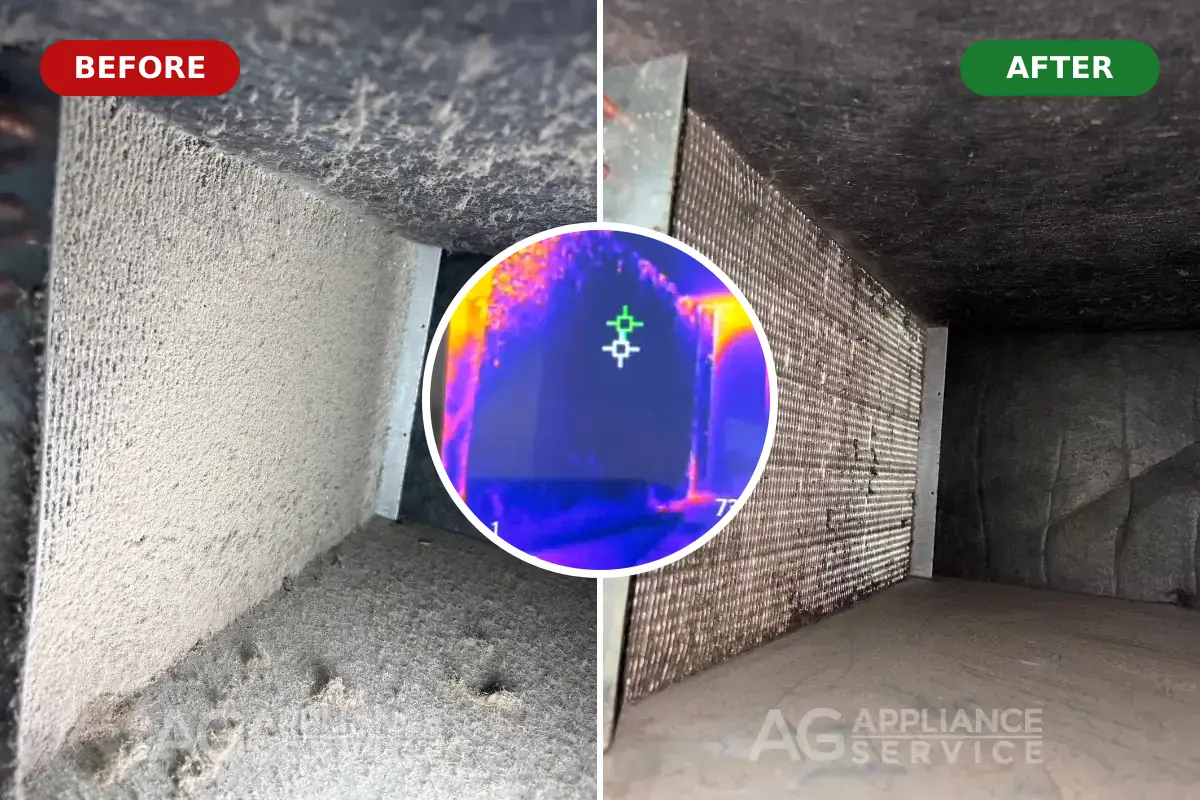
How to Clean Sub-Zero Refrigerator Coils: Thermal Images Show Why It Matters
The condenser coils in your Sub-Zero refrigerator release heat from the refrigeration system. When they are covered with dust and debris, the refrigerator cannot dissipate that heat efficiently. As a result, the compressor has to work harder to keep the unit cold, and that puts unnecessary strain on the compressor and other cooling system components. Knowing how to clean Sub-Zero refrigerator coils, and how often to do it, is one of the most effective pieces of routine maintenance any Sub-Zero owner can perform — and one of the most common service calls we see as a Miami appliance repair company.
Cleaning the accessible condenser coils is a standard maintenance task that Sub-Zero recommends on a regular basis. That said, if cooling problems persist after the coils have been properly cleaned, that is a sign the refrigerator needs professional evaluation rather than additional DIY attempts.
Dust and Debris Restrict Airflow
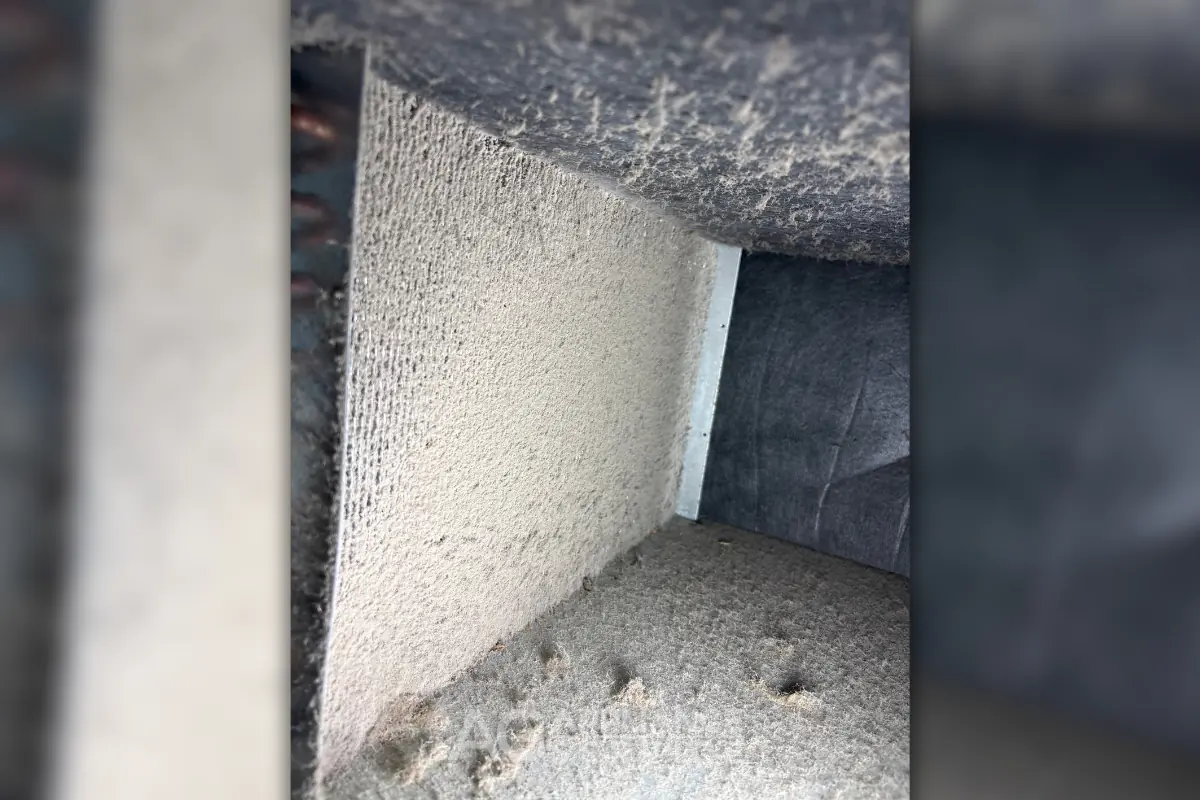
Sub-Zero condenser coils before cleaning — dust accumulation restricts airflow and the coil's ability to shed heat.
Condenser coils work by allowing refrigerant to shed heat as it passes through them. Air circulates across the coil surface and carries that heat away from the unit. When a thick layer of dust, pet hair, and debris coats the coils, airflow is restricted and the coils can no longer remove heat effectively.
The result is a refrigerator that has to work much harder to reach and maintain its set temperatures. Over time, this translates into increased wear on the compressor and other components that were not designed to operate continuously at elevated capacity.
Common signs that condenser coils may need cleaning include:
- The compressor runs more often or stays on longer than usual
- The unit feels warm to the touch near the coil area
- Interior temperatures are slightly higher than the set point
- The refrigerator sounds louder than normal
Sub-Zero recommends cleaning the condenser using a vacuum with a brush attachment or the brand's own condenser cleaning brush. Avoid using compressed air, which can force dust deeper into the coil fins or into other components. Water should never be used on or near the coils.
Dirty Coils Can Lead to Higher Energy Bills
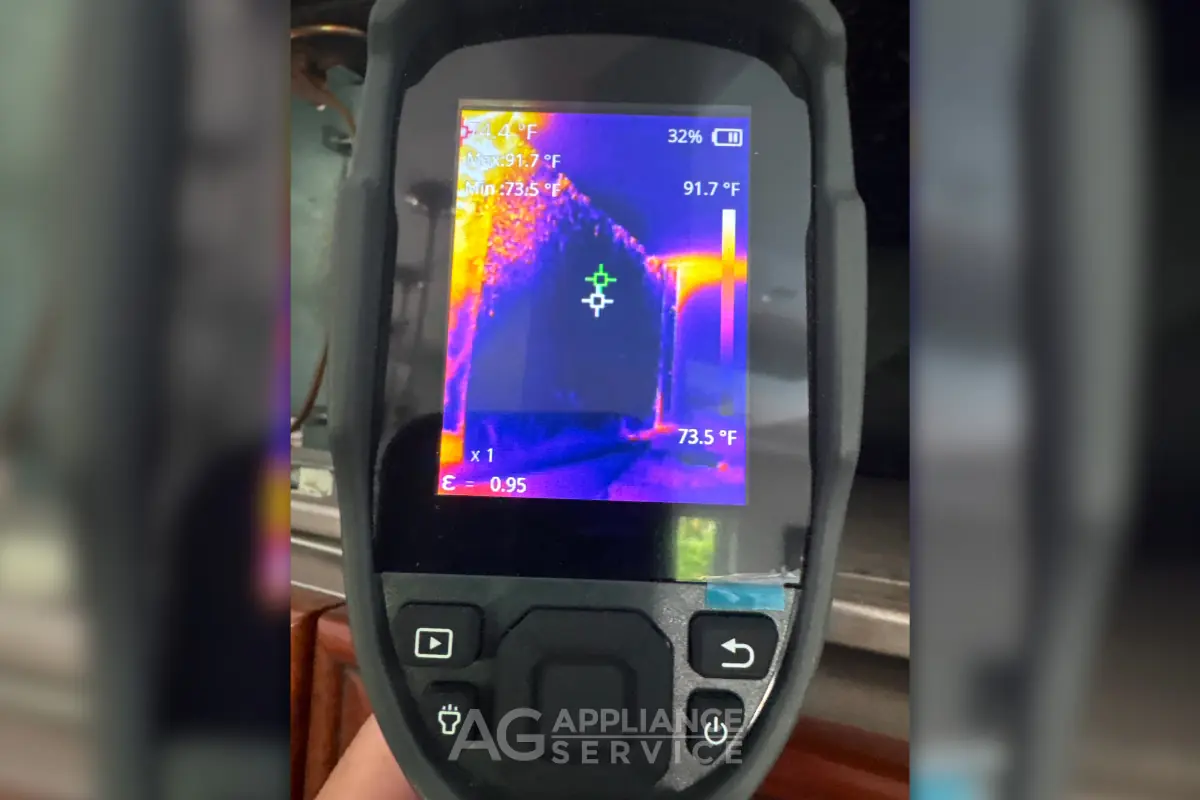
Before cleaning, the thermal image shows heat concentrated near part of the condenser instead of spreading evenly across the coil.
When condenser coils cannot release heat efficiently, the compressor compensates by cycling less efficiently and staying on more frequently. A compressor that should be cycling on and off throughout the day may instead run almost continuously, drawing significantly more power with every hour of operation.
In a household where the refrigerator is one of the largest ongoing energy consumers, a poorly maintained condenser can add measurably to monthly utility costs. Even modest increases in compressor run time can noticeably increase energy use over time, and that extra cost accumulates month after month until maintenance is performed.
Annual coil cleaning is the most straightforward way to prevent this pattern. In homes with pets or high-dust environments, cleaning every six months may be more appropriate.
Dirty Coils Can Cause Cooling Problems
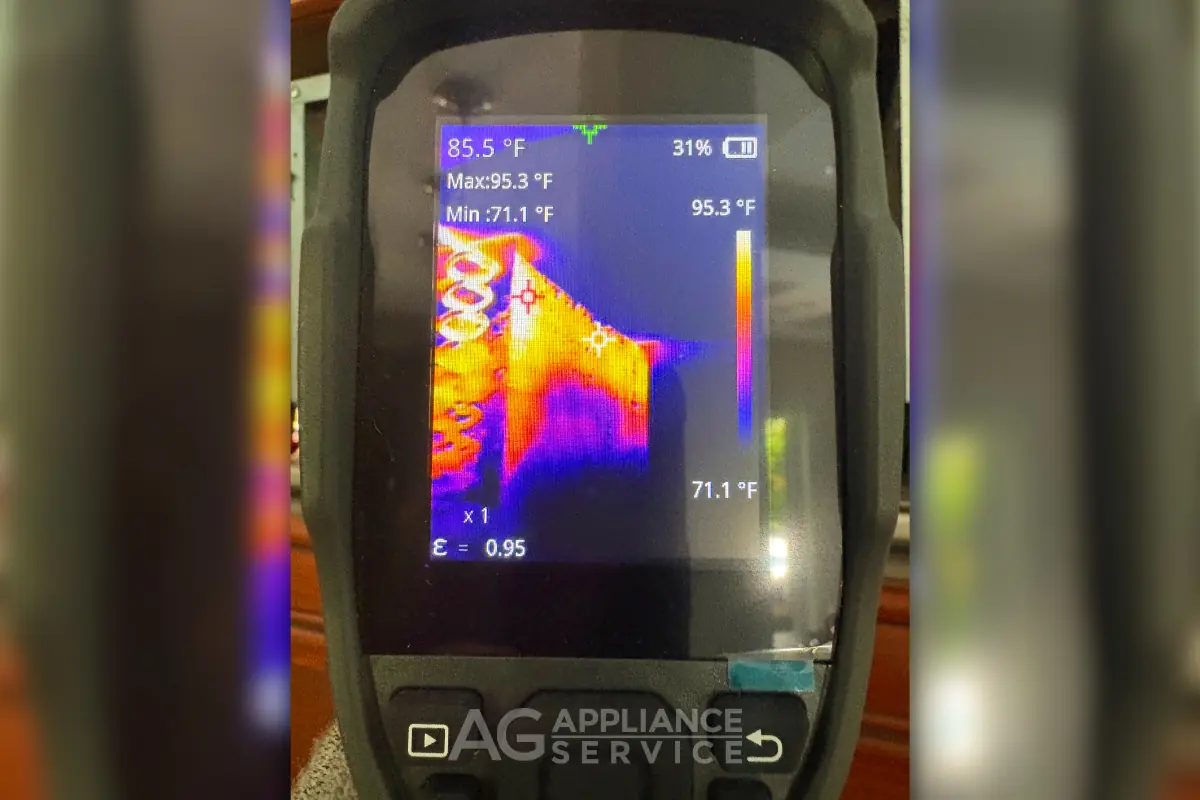
After cleaning, the thermal image shows heat spreading evenly across the full coil surface, confirming the condenser is releasing heat normally again.
A refrigerator running with heavily restricted coils may eventually be unable to maintain safe food storage temperatures. This is most often noticed as food spoiling sooner than expected, produce wilting faster, or dairy products not staying as cold as they should.
In more severe cases, the refrigerator may cycle through longer and longer cooling attempts without reaching its target temperature. On many models, the freezer may appear to stay colder than the fresh food compartment because frozen food retains temperature longer. Depending on the design, however, both sections can eventually become too warm if heat cannot be removed efficiently.
If cleaning the condenser coils does not restore normal temperatures within a reasonable period, the cooling problem likely has an additional cause that requires professional diagnosis. A dirty coil is one contributing factor, but issues with the evaporator fan, sensors, or sealed system can produce similar symptoms and require hands-on evaluation. For a full overview of what can cause a Sub-Zero to lose cooling performance, see our post on Sub-Zero refrigerator not cooling.
Door Seal Problems Can Make Dirty Coils Worse
A worn or damaged door gasket allows warm ambient air to enter the refrigerator continuously. The refrigerator must then work harder to re-cool that warm air, on top of whatever heat load the condenser is already struggling to manage.
When both issues are present at the same time, dirty coils and a failing door seal, the combined effect on the compressor is significantly greater than either problem alone. The compressor runs longer, temperatures become harder to maintain, and the risk of a cooling failure increases.
If you notice condensation along door edges, warm spots near the door frame, or a gasket that does not feel firmly seated, that seal should be inspected and replaced. Our post on Sub-Zero door not sealing properly covers the most common causes and what to look for.
When It's Time to Schedule Professional Sub-Zero Service
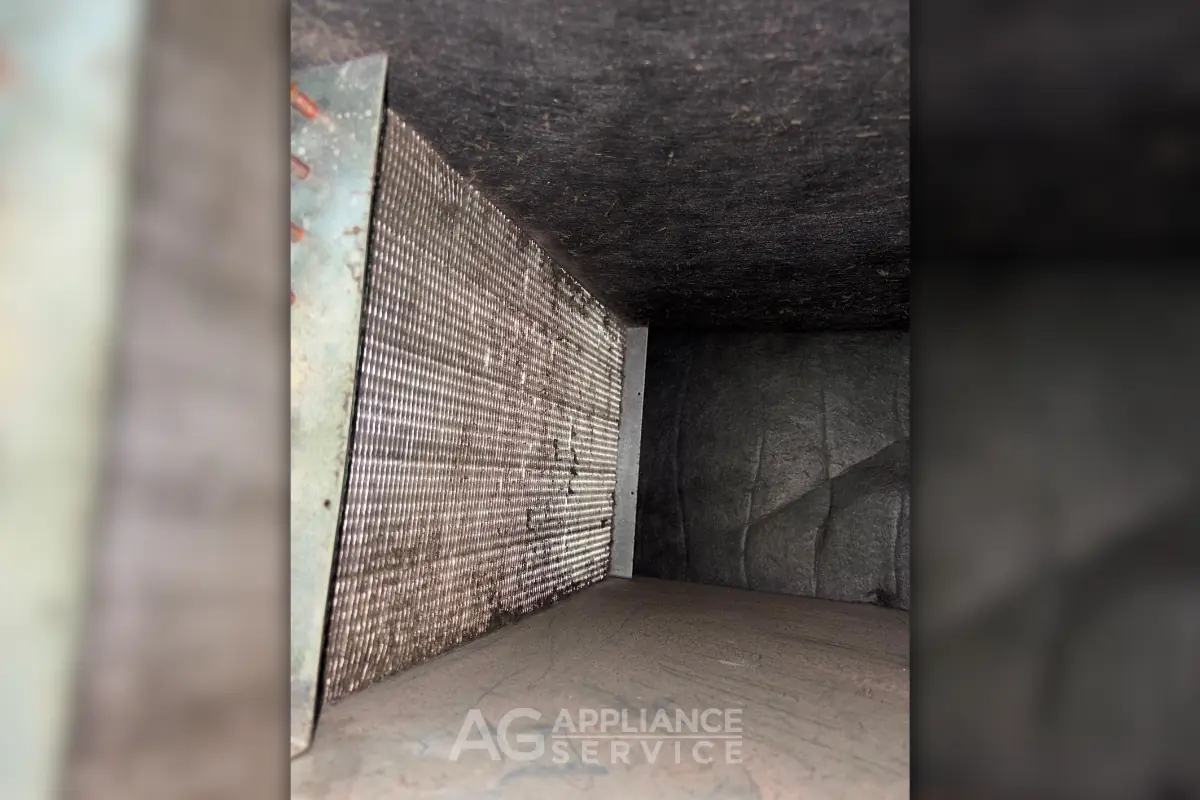
Sub-Zero condenser coils after cleaning — the coil surface is clear and airflow is fully restored.
Routine coil cleaning is maintenance any homeowner can perform, but there are situations where professional service is the right call. Schedule an evaluation if you notice any of the following after cleaning the condenser:
- The refrigerator is still not reaching its set temperature
- The compressor continues running for long uninterrupted periods
- You hear unusual noises such as clicking, buzzing, or grinding
- The display is showing error codes
- There is unexpected frost buildup inside the unit
- Temperatures fluctuate even when the unit appears to be running normally
These symptoms point to issues that go beyond coil maintenance. Problems with the sealed system, refrigerant, evaporator fan, or control board require professional diagnostic equipment and factory-trained technicians. Attempting to troubleshoot sealed system or electrical issues without the proper training can cause additional damage and may affect warranty coverage.
Sub-Zero recommends having the unit serviced by a factory-authorized technician for any repair work beyond routine maintenance tasks.
Routine Coil Cleaning Is One of the Best Things You Can Do for Your Sub-Zero
Keeping the condenser coils clean allows your Sub-Zero refrigerator to release heat efficiently, run quieter, use less energy, and maintain stable temperatures over the long term. Most manufacturers, including Sub-Zero, recommend cleaning the condenser at least once a year as part of a standard maintenance routine.
If you are in the Miami area and want a professional to inspect or service your unit, our team handles Sub-Zero repair in Miami and can evaluate everything from coil condition to sealed system performance. Catching small issues during a maintenance visit is almost always less costly than addressing a full cooling failure later.