

Sub-Zero Ice Maker Isn't Making Ice: Expert-Backed Reasons Your Ice Production Halted
When a Sub-Zero ice maker isn't making ice, it can disrupt your daily routine and signal that your refrigerator needs attention. Sub-Zero appliances are engineered for premium performance, but like any complex system, several factors can interfere with ice production. Some issues are simple to spot, while others require a trained technician to diagnose safely and professionally. Understanding what may be happening helps you know when a basic check is appropriate and when to schedule a service visit.
AG Appliance Service is factory authorized for Sub-Zero Ice Maker Repair under the 5- and 12-year warranties, so our technicians are trained specifically on the brand's technologies. With the right diagnostic approach, many ice production problems can be resolved efficiently and professionally.
Why a Sub-Zero Ice Maker Isn't Making Ice
Sub-Zero refrigerators rely on precise temperatures, consistent water flow, and reliable electronic controls to produce ice. When any of these elements are disrupted, ice output slows or stops entirely. Below are the most common reasons your ice maker may not be producing ice, arranged from simpler conditions to more advanced mechanical failures.
Freezer Temperature Is Too High
When a Sub-Zero ice maker isn't making ice, one of the most common causes is a freezer that is running too warm. Sub-Zero typically advises keeping the freezer at 0°F for optimal performance. If temperatures rise even a few degrees above this point, you may see soft cubes, partially formed cubes, or no ice at all.
A safe way to check your freezer temperature is to review the reading on your refrigerator's digital control panel. If your model uses a dial or non-digital control, setting it to the recommended mid-range position generally aligns with the correct temperature target. It may take several hours for the freezer to stabilize after an adjustment, so give the appliance time to reach the new set point.
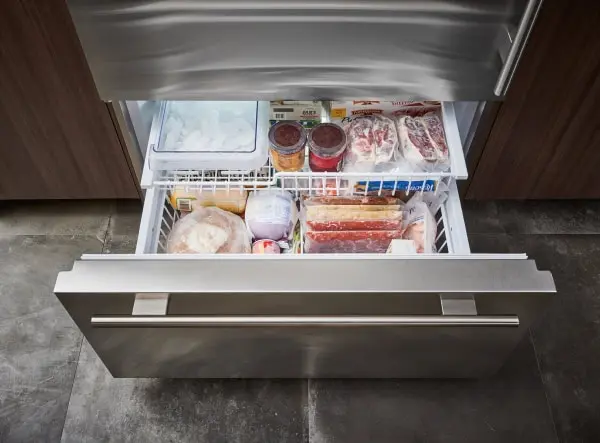
Photo by Sub-Zero
Airflow also plays a major role in maintaining consistent temperatures. When items are stacked tightly against interior walls or vents, cold air cannot circulate effectively, leading to warm spots that interfere with ice production. A simple check is ensuring that food items are not pressed directly against the vents and that air can flow freely throughout the freezer compartment.
If the temperature remains above 0°F despite proper airflow and correct settings, a technician should inspect the appliance. In many cases, unstable temperatures point to thermostat issues, sensor problems, or control irregularities. These components regulate how the freezer cools and require proper diagnostic tools and training to evaluate safely.
Ice Maker Switch Is Turned Off
Many Sub-Zero models include an internal control that toggles ice production on and off. This feature is especially common in the 500 Series (including models 532, 542, and 561), various 600 and 700 Series units, Classic Series models, and Sub-Zero Pro refrigerators. Controls may appear as an internal switch or a digital on/off option on the control panel. It is not uncommon for these controls to be turned off during cleaning or after reorganizing the freezer.
If the ice maker suddenly stops producing ice after recent changes to your refrigerator's setup, it may be worth verifying that the ice feature is enabled, as specified in your owner's manual or on your digital display. Avoid reaching behind or moving the appliance, as this introduces safety risks. If the controls seem unresponsive or you are unsure how your model handles ice settings, a trained technician can safely inspect the system and determine whether the ice maker was disabled or another issue is preventing ice production.
Faulty Ice Maker Assembly
The ice maker is a complete assembly, and when its internal mechanisms malfunction, the most effective solution is replacing the entire unit. Symptoms may include inconsistent cycling, partial harvests, or no ice production at all. Sub-Zero designs its ice makers as integrated components, so internal repairs are not recommended.
If the assembly is failing, a technician will test electrical connections, sensor responses, and ice maker movement patterns to verify the source of the issue. Ice maker replacement restores proper operation and ensures compatibility with your specific model.
Water Filter Needs Replacement
A worn or clogged water filter restricts water flow to the ice maker. This can result in small cubes, slow production, or no cubes forming at all. Water quality issues may also appear in ice taste or clarity. Sub-Zero recommends replacing water filters at intervals defined by the model and usage.
A safe check involves confirming whether the filter is due for replacement, using your refrigerator's indicator or documentation. If replacing the filter does not restore ice production, a technician should verify whether restricted flow is occurring elsewhere in the system.
Water Supply Issue
If water cannot reach the ice maker, production will stop entirely. Some causes relate to the household water supply, while others involve components inside the refrigerator. You may notice an empty ice bin, reduced water dispensing (if your model includes a dispenser), or inconsistent cube formation.
You can visually confirm that nothing is compressing the water line near the refrigerator, as long as this does not require moving the appliance. A professional should handle anything involving internal valves, water pressure, or tubing. These components require careful handling, and incorrect troubleshooting can lead to leaks or electrical hazards.
Frozen Fill Tube
The fill tube delivers water to the ice maker. If it becomes frozen, water cannot enter the ice mold, halting production. This condition often presents as a complete stop in ice output with no other visible symptoms.
While customers often assume manual defrosting is a solution, modern Sub-Zero refrigerators self-regulate defrost cycles, and manually defrosting can interfere with diagnosing the actual problem. A frozen fill tube can indicate airflow issues, temperature irregularities, or a control-related malfunction. A technician can identify the underlying cause and restore proper operation without risking damage to the appliance.
Faulty Water Inlet Valve
The water inlet valve regulates how much water enters the refrigerator. If it fails mechanically or electrically, the ice maker will not receive water even though other components appear functional. Symptoms typically include no water reaching the ice mold or irregular filling patterns.
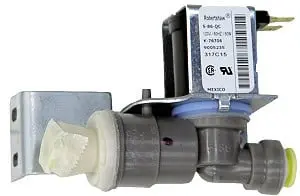
4201460 Dual Ice Maker Inlet Valve
Working with inlet valves involves interacting with pressurized water systems, so a professional should perform all testing and replacement work. This ensures the repair is performed safely and aligns with Sub-Zero's engineering standards.
Freezer Door Seal Is Damaged
A compromised freezer door gasket allows warm air to enter the compartment. Even slight temperature changes can affect ice quality and production speed. You may notice frost buildup, visible gaps in the gasket, or temperature fluctuations.
A safe check includes visually inspecting the gasket for tears, warping, or debris, preventing a proper seal. If sealing issues persist, a technician can assess whether gasket replacement or hinge adjustment is necessary to restore proper temperature regulation.
Control Board or Sensor Malfunction
Sub-Zero refrigerators rely on a network of sensors and electronic controls to manage temperature, water flow, and ice production. If a sensor fails or a control board develops a fault, the ice maker may stop cycling correctly or fail to harvest ice.
When a Sub-Zero ice maker isn't making ice, the cause may be a simple setting change or a component that requires professional attention. From temperature inconsistencies to water flow interruptions or control system failures, each issue impacts ice production in different ways. While safe visual checks can help you identify obvious concerns, anything involving internal components, electrical systems, or water valves should be handled by a trained technician. For expert diagnostics and reliable service, AG Appliance Service provides factory-authorized support, including repairs for Sub-Zero's 5- and 12-year warranties. If your refrigerator needs attention, our team is here to help with trusted Sub-Zero refrigerator repair in Miami.