

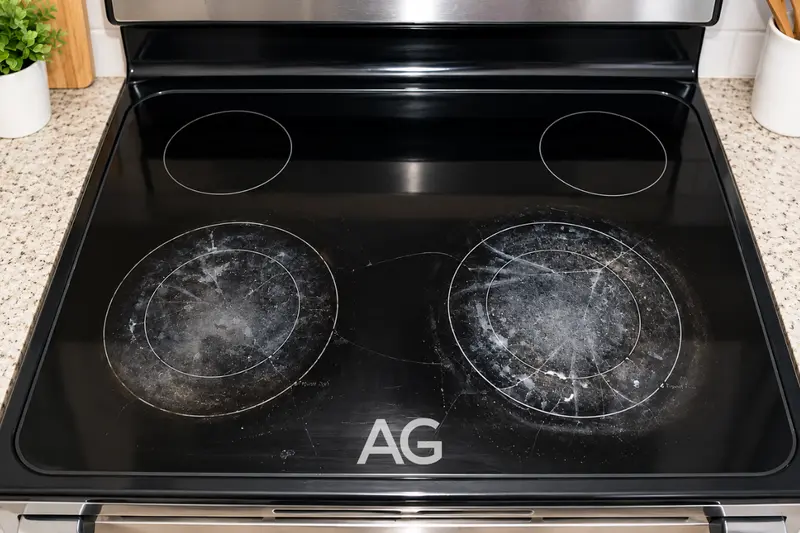
How to Clean Glass Cooktops and Ovens Safely
Holiday cooking puts ranges and ovens through some of their heaviest use of the year. Cleaning before the holidays can help get your appliance ready, but the wrong cleaning products, cookware, or habits can cause expensive damage.
This guide explains how to clean glass cooktops and ovens safely while protecting the glass, heating elements, sensors, and oven components. Along the way, we have included photos our technicians took on real service calls around Miami. None of these are staged. They are the kinds of damage we see every week, and almost all of it was preventable.
How to Clean a Glass Cooktop Safely
Before you reach for a scrubber, let’s go over how to remove spills without damaging the glass underneath. The right approach depends on what spilled and whether it has baked onto the surface. The photos in this section show why it pays to address residue carefully rather than force it off.
Let the Cooktop Cool Before Routine Cleaning
Clean the cooktop after each use once it has completely cooled and is safe to touch. Wipe up food spills promptly to prevent staining and buildup. Use only cleaners specifically designed for ceramic glass cooktops or approved by the manufacturer.
Avoid steel wool, abrasive scouring pads, abrasive powders, and harsh chemicals. These can leave scratches, dull the finish, or damage the surface around the cooking zones. Keep the control panel clean and dry, and clean around burner knobs so grease and food do not build up.
Use the Right Tools for Burned-On Food
For stubborn burned-on residue, use a cooktop scraper or razor scraper held at a low angle. Work carefully so the edge lifts residue without scratching or gouging the glass. Follow the appliance manufacturer’s recommendations for approved cleaners and scraping methods.
Be Extra Careful With Sugary and Starchy Spills
Sugary spills are a major threat to ceramic glass because they can pit or permanently damage the surface. Remove them according to the manufacturer’s instructions. Pasta, potatoes, rice, oatmeal, and other starchy foods are also likely to boil over and leave sticky residue on a hot cooktop.
Here is what that looks like the morning after. The pale ring around this burner is dried, starchy boil-over that was left to bake on. It was still cleanable at this stage, but not for long.
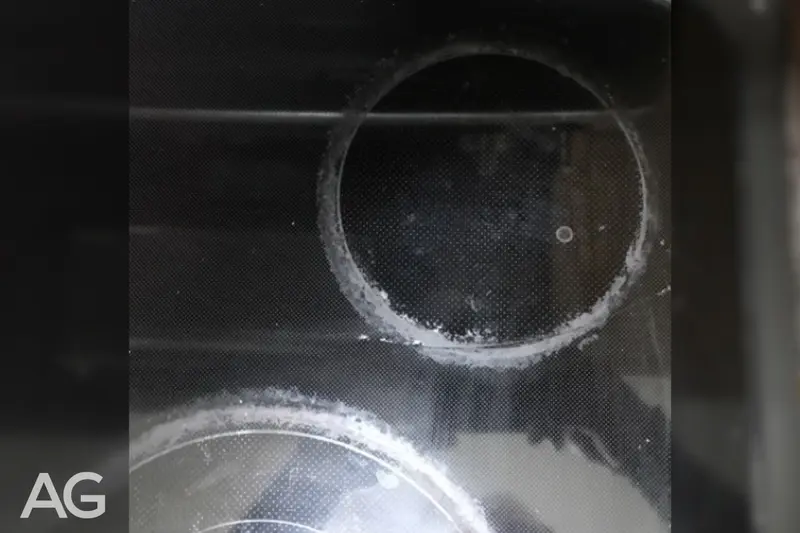
Why Starchy Residue Can Become a Serious Problem
When starchy water dries between a hot pan and the glass, it can leave stubborn residue that becomes increasingly difficult to remove with repeated heating. In severe cases, cookware may adhere to the surface, and attempting to force it loose can damage the glass.
This next photo is the same problem a few steps further along. The homeowner boiled pasta, the water ran under the pot, and the pot cooked onto the glass. You can see the dark, glazed spot in the center of the burner where the pan bottom was sitting.
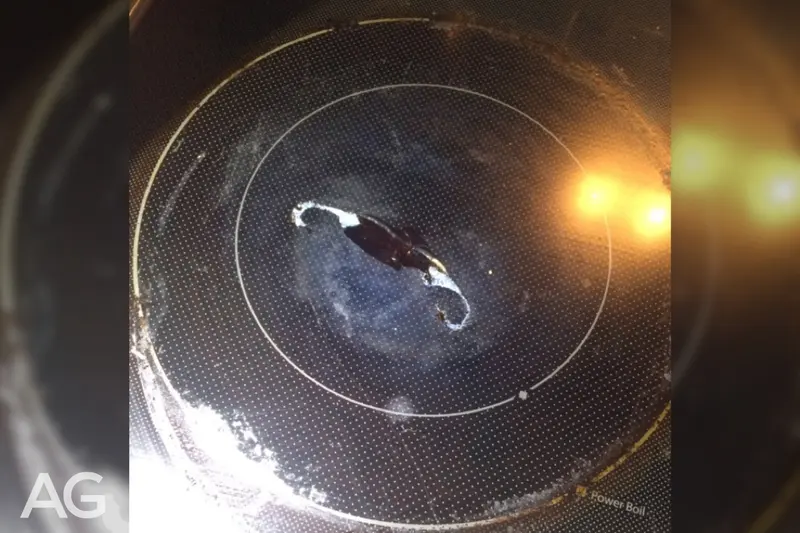
If a Pan Adheres to the Glass
Never force stuck cookware loose. Pulling, twisting, or prying can scratch, chip, or crack the glass. Turn the appliance off, allow it to cool, and follow the manufacturer’s instructions or have a qualified technician evaluate the situation.
Unfortunately, most people pull. This is what we found on a call where the pot came loose but took the top layer of glass with it. That rough, chipped ring is the exact footprint of the pan.
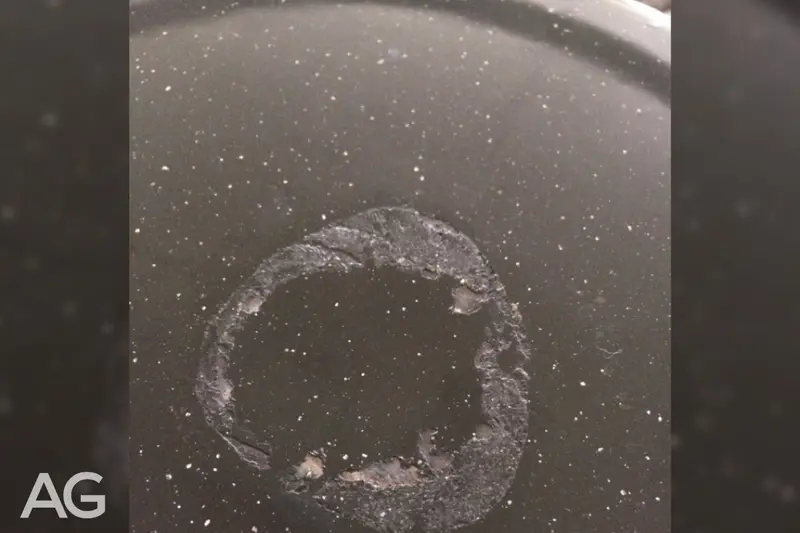
Know What Permanent Damage Looks Like
Once the glass has been chipped or cracked by a stuck pot, routine cleaner will not restore it. Continued heating can make damage worse, so stop using the affected cooking zone and have a qualified appliance technician inspect it.
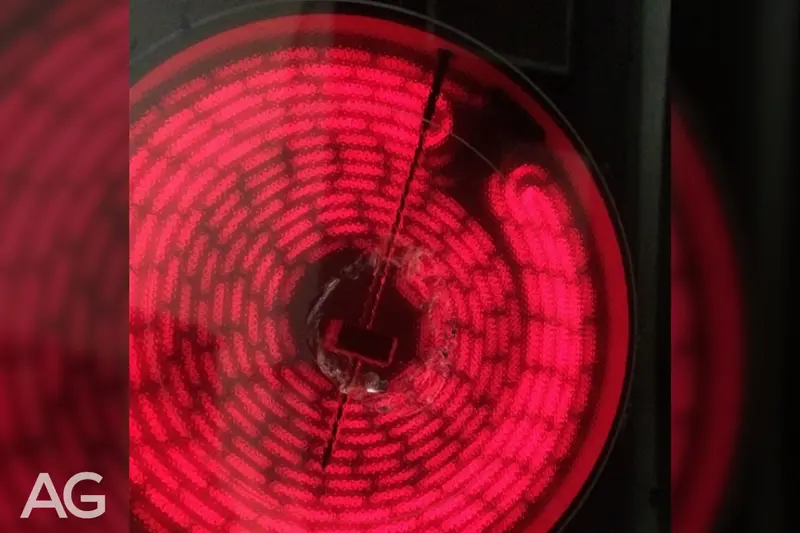
We turned this burner on so you can see why. With the element glowing underneath, the chip in the center and the crack running out from it stand out clearly. Every heating cycle stresses that crack a little more.
Your Cookware Can Affect Your Glass Cooktop
Keeping the glass clean is only part of the job. What you set on it matters, too. Let’s turn our attention to the pots and pans themselves—their condition and how you move them can affect both the cooking surface and how evenly your food heats.
Always Lift, Never Slide
Sliding pots and pans across the cooktop can scratch the glass. Always lift cookware when repositioning it. Keep the bottoms of pots and pans clean, dry, and free of grease and burned-on residue before setting them on the surface.
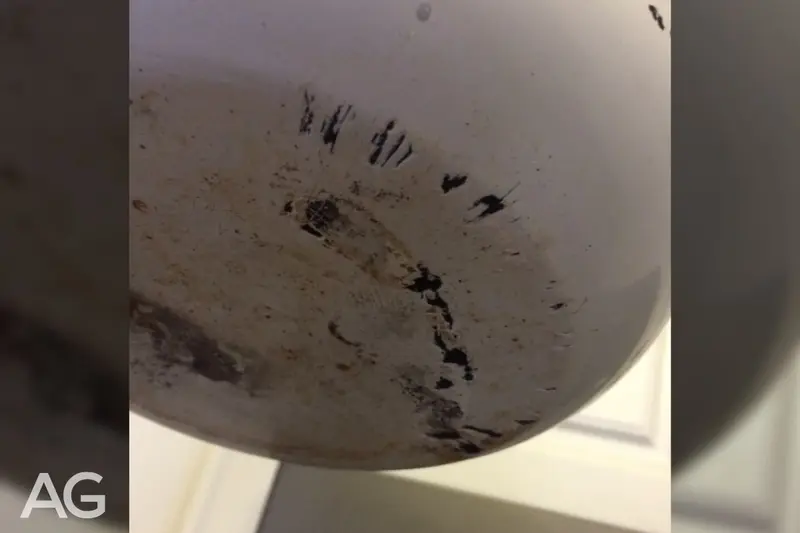
When we arrive for a cooktop complaint, one of the first things we do is flip the customer’s pans over. This one is typical: years of baked-on grease on the bottom, which smokes, transfers to the glass, and cooks on with every use.
Inspect Pan Bottoms and Choose Flat Cookware
Grease baked onto a pan bottom can transfer to the glass, smoke, and contribute to stubborn buildup. Use cookware with flat, smooth bottoms that make proper contact with the cooking surface, and avoid warped, bowed, or uneven-bottom pans.
A quick check before cooking helps protect the cooktop and makes routine cleaning easier. Proper contact also helps the cooktop heat more consistently, while damaged cookware can contribute to poor performance and surface damage.
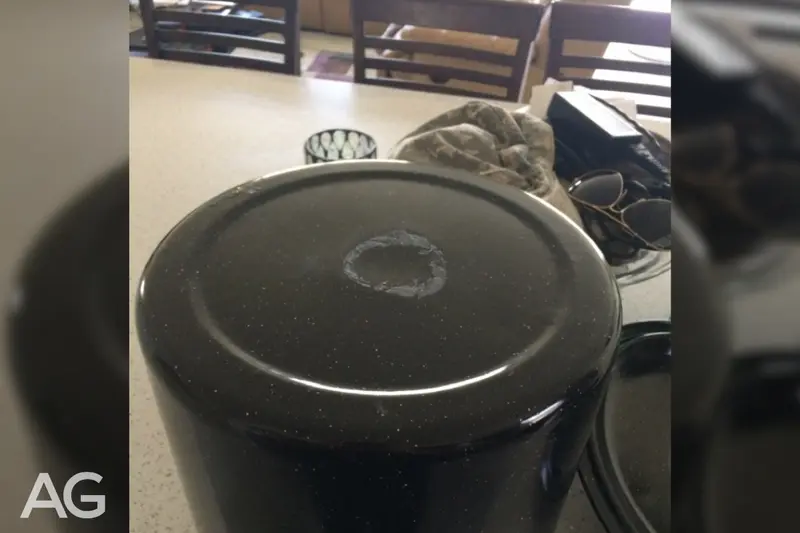
Take a look at this stock pot from a recent call. From the top it looked fine, but the bottom has a raised, scarred patch right in the center. That is the only part of the pot touching the glass, so all the heat and weight were concentrated on one small spot.
Replace Cookware That Is No Longer Flat
If a pan rocks on a flat counter or has a visibly damaged base, retire it from use on a glass cooktop. Replacing one unstable pan is less costly than replacing a damaged cooking surface.
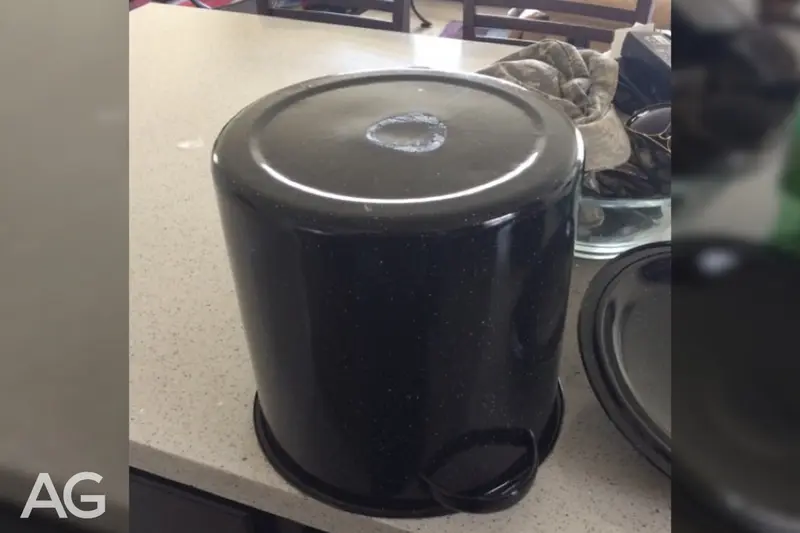
Here is a closer look at that same pot base. Once the metal is pitted and uneven like this, it will never sit flat again, and it belongs in the recycling bin rather than on a glass cooktop.
Regular inspections are one part of range and oven maintenance. They help identify cookware and appliance problems before heavy holiday cooking begins.
Glass Cooktop Habits That Can Prevent Damage
Beyond cleaning and cookware, a few everyday precautions can help protect your cooktop. The next examples show what impact damage looks like and why warning lights or unusual heating deserve attention. Knowing the difference between a spill and a repair issue helps you decide when to put down the cleaner and call a technician.
Protect the Surface From Impact and Heat
Never use the cooktop as a cutting board or food preparation surface. Avoid dropping heavy cookware or other objects onto the glass, and do not place excessive weight on it. Never put plastic, paper products, or anything else that can melt or burn on a hot cooking zone.
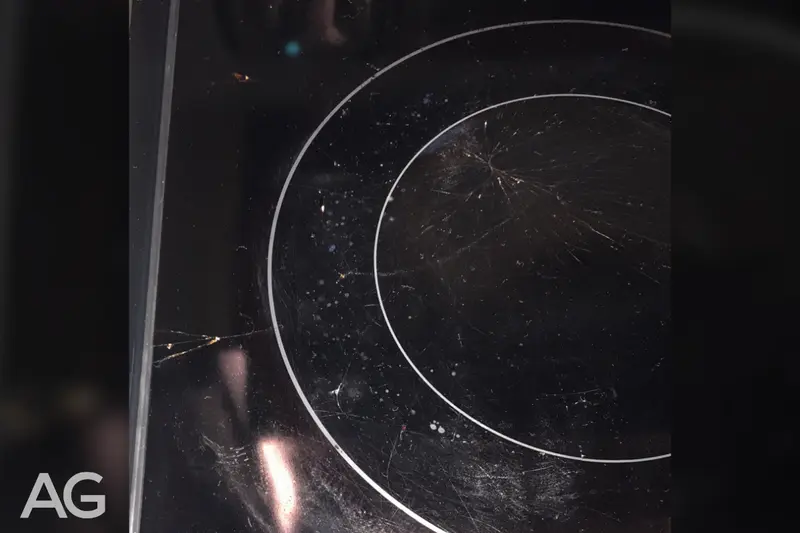
Take a look at what happened when a pan was dropped onto this cooktop. You can see the spiderweb of cracks spreading out from the impact point inside the burner ring. This was damage from a dropped pan, not years of wear. If your cooktop looks like this, stop using it and have a qualified technician inspect it.
Take Cooktop Damage Seriously
Cracks can develop from impact, excessive weight, thermal stress, or existing damage to the glass. If you notice a crack or chip, stop using the cooktop and disconnect power until it is repaired. If it is safe to do so, unplug the appliance or switch off its dedicated circuit breaker rather than touching damaged components.
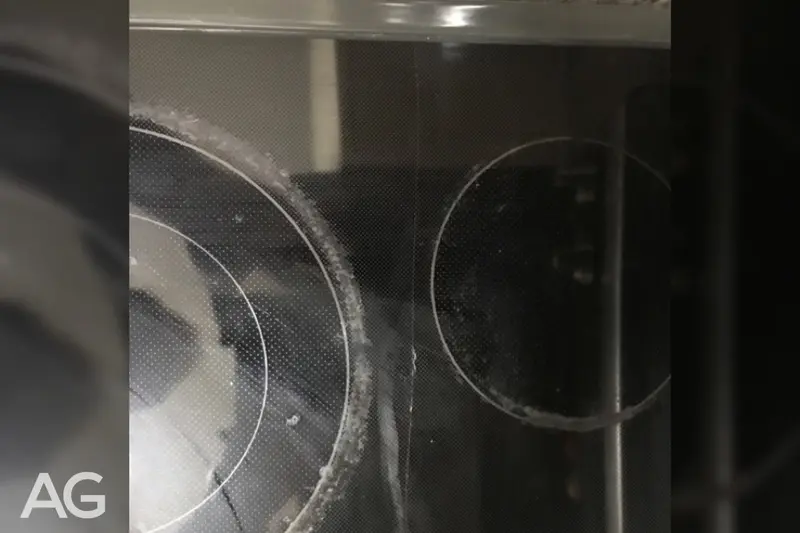
Not every crack comes from an impact. The single clean line running straight across this burner is a heat crack. Nothing was dropped here; the glass simply failed under thermal stress, and it happened while the burner was in use.
Inspect Your Cooktop for Warning Signs
Regularly check the glass for cracks, chips, or other damage. Verify that surface elements cycle on and off normally and that indicator lights operate correctly.
Without removing panels, inspect the visible power cord, plug, and outlet for fraying, discoloration, melting, or other signs of overheating. Do not touch or tighten terminal connections yourself. If a connection is not specifically designed by the manufacturer to be safely accessible, have a qualified appliance technician inspect it.
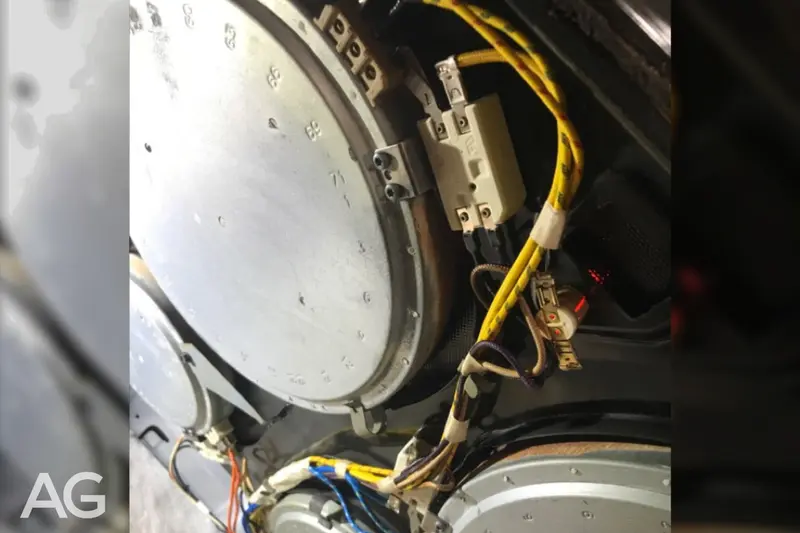
Is the red “hot surface” light staying on even after the cooktop has cooled? Faulty sensors in the cooktop element or a shorted switch can keep that light on. The photo below takes you beneath the glass for a look at the element and its connected components—the area a technician checks to find the cause. This is an electrical issue that needs diagnosis, not more cleaning.
Problems Can Be Hidden Beneath the Glass
Radiant cooktops contain heating elements, sensors, switches, wiring, and other components beneath the glass. A surface-hot light that stays on can point to a sensor or switch problem rather than a cleaning issue.
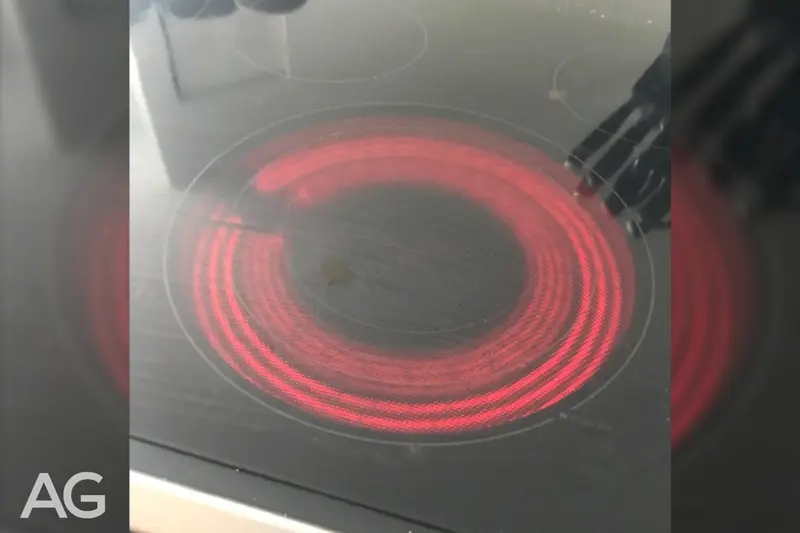
Here is another one that had nothing to do with cleaning. Notice how only part of this element is glowing while the rest stays dark. The customer thought the glass was dirty because food was cooking unevenly, but the coil itself had failed on one side.
Leave Internal Electrical Repairs to a Technician
A burner that does not heat evenly, will not cycle correctly, or stops heating may have an internal component problem. Internal electrical inspections and repairs should be left to a qualified appliance technician.
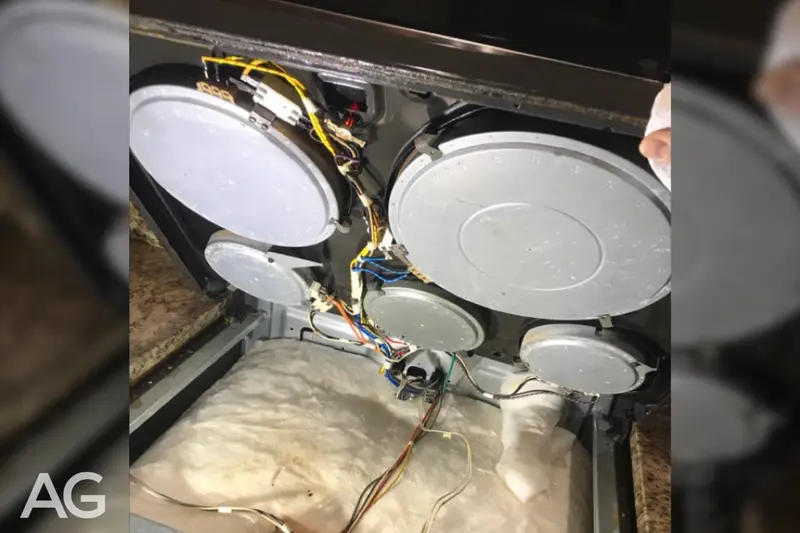
To give you an idea of what is under there, this is a range with the glass top raised. You can see the radiant elements, the insulation, and the bundle of wiring and connectors that ties it all together. Everything in this photo carries 240 volts when the range is plugged in, which is why we ask homeowners not to open it up themselves.
How to Clean an Oven Safely
Now let’s move inside the oven. The goal is to remove spills while protecting the interior finish, seals, and heating components. Start with your model’s cleaning instructions, and be careful with shortcuts meant to catch drips—aluminum foil on the oven floor can cause the very damage you are trying to avoid.
Clean Spills Before They Become Heavy Buildup
Allow the oven to cool before routine manual cleaning. Wipe up spills before repeated heating bakes them onto the oven interior. Use non-abrasive cleaning methods and products approved by the manufacturer.
Follow the owner’s manual for areas that should not be exposed to oven cleaner. Do not spray cleaner on heating elements, door seals, or other protected components unless the manufacturer specifically permits it.
Never Line the Bottom of Your Oven With Aluminum Foil
Never line the oven cavity or oven bottom with aluminum foil unless the manufacturer specifically permits it. Foil can trap or reflect excessive heat, interfere with proper airflow, damage the porcelain enamel finish, and affect heat distribution and cooking performance.
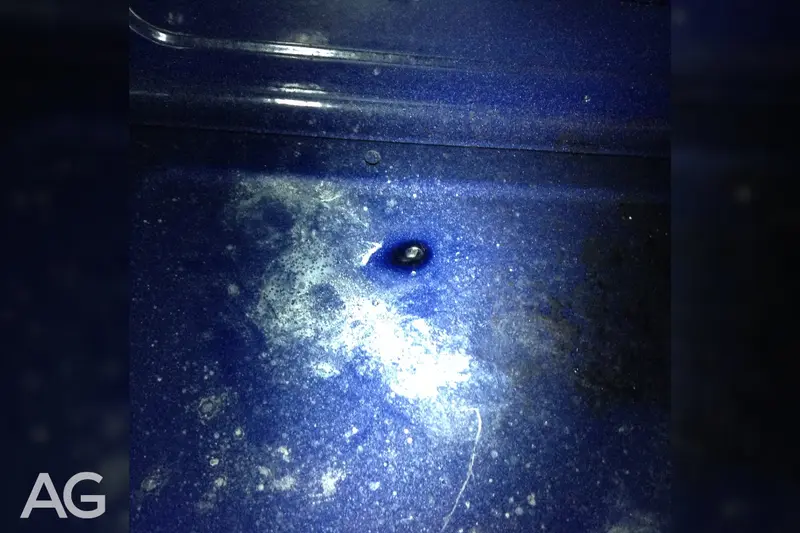
This is one we photograph often, because people rarely believe it until they see it. The oven floor below should be smooth, glossy blue enamel. Instead, the finish has blistered and flaked away in a large patch, and there is a hole burned right through where the foil sat. Foil traps heat against the enamel, and once the finish is gone, the bare metal underneath will rust. There is no cleaning product that fixes this; the oven bottom has to be replaced.
Think Twice Before Using the Self-Clean Cycle
The self-clean feature operates at very high temperatures to burn food residue into ash. Because the cycle generates significantly more heat than normal baking, it can place additional thermal stress on the appliance. Follow the manufacturer’s instructions carefully, and avoid running self-clean immediately before an important meal in case an existing component problem becomes apparent.
If your oven includes a self-clean feature, follow the manufacturer’s recommendations for when and how to use it. For routine spills, manual cleaning with manufacturer-approved products may be sufficient.
A Safe Holiday Oven Cleaning Guide
Use this quick pre-holiday checklist a few days before a major meal:
- Clean the glass cooktop with an approved ceramic cooktop cleaner.
- Carefully remove burned-on residue without scratching the glass.
- Check the glass for chips and cracks.
- Inspect cookware bottoms for grease, residue, warping, or damage.
- Clean around knobs and controls.
- Wipe up spills and grease inside the oven.
- Remove aluminum foil improperly lining the oven bottom.
- Check that burners and heating elements operate normally.
- Make sure indicator lights and controls respond correctly.
- Check the visible power cord, plug, and outlet for overheating or damage.
- Test the oven before the day of the holiday meal.
- Schedule service for unusual heating, error codes, damaged glass, or unresponsive controls.
When Cleaning Reveals a Bigger Range or Oven Problem
Cleaning can make an existing performance problem easier to notice. If basic care reveals one of the problems below, professional Miami cooktop and oven repair can identify the cause safely.
Signs it may be time for service include:
- Cracked or chipped cooktop glass
- A burner that will not heat
- Uneven or inconsistent heating
- A heating element that does not cycle properly
- An indicator or surface-hot light that remains on
- An oven that does not reach or maintain temperature
- Error codes
- Unresponsive controls
- Visible heat damage
- A frayed cord or discoloration near the plug or outlet
- Unusual electrical or burning odors
Keep Your Range Ready for Holiday Cooking
Knowing how to clean a glass cooktop and how to clean an oven safely is not just about appearance. Every photo in this article came from a kitchen where a little prevention would have saved a repair bill. Regular cleaning, proper cookware habits, prompt attention to spills, and manufacturer-approved maintenance can help prevent avoidable appliance damage.
Test your range and oven before heavy holiday cooking begins. If you find cracked glass, uneven heating, faulty controls, or another concern, AG Appliance Service can help.
Ready Your Range for the Holidays
AG Appliance Service provides professional range and oven repair in Miami. Schedule service before a small warning sign becomes a holiday cooking interruption.
Schedule Range & Oven Repair